Learn what every symbol on the card means.Full credits and sources at beakbrain.com/symbols
 ForestCup nestSmall · 20 g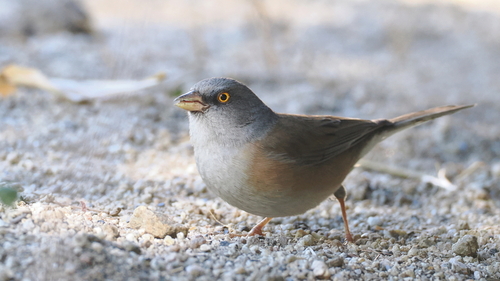
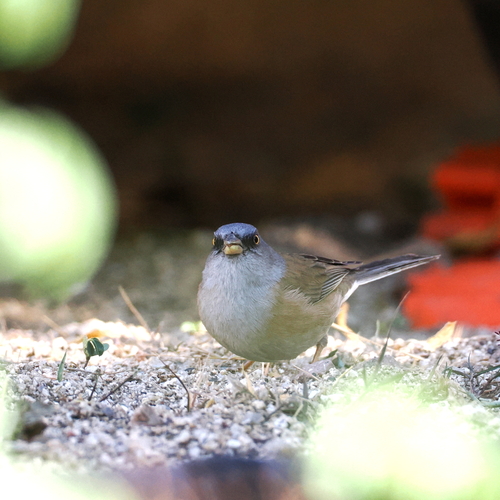
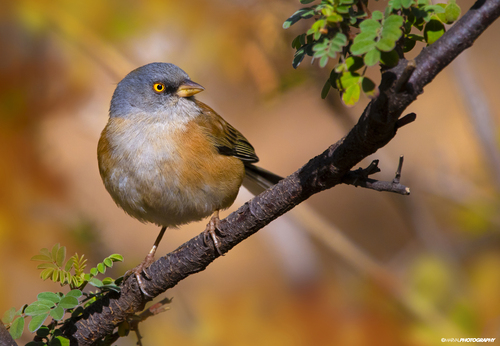
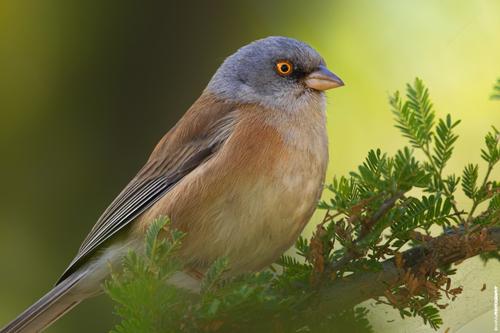

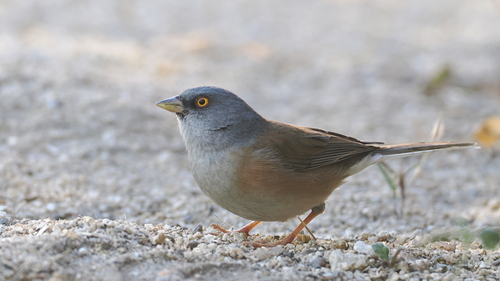
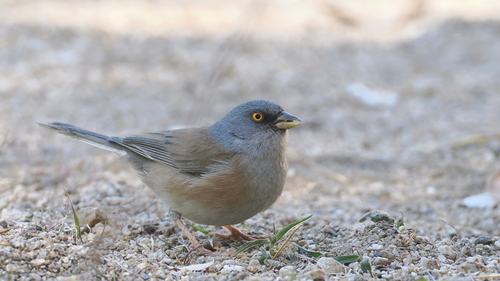
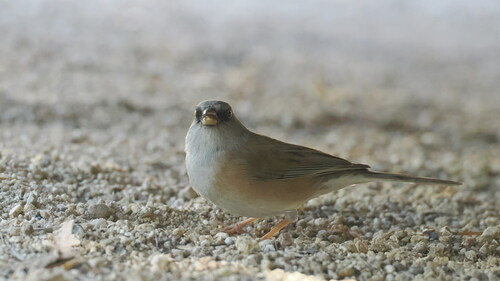
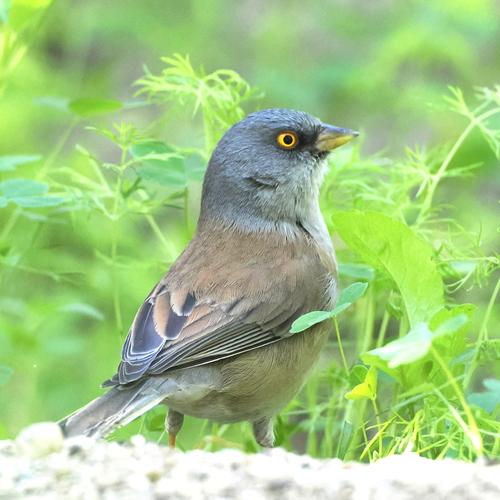
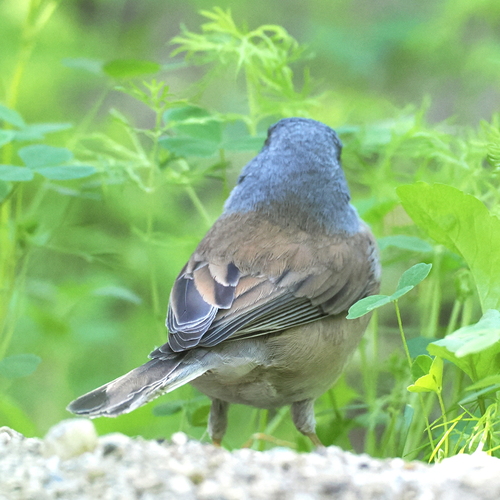
ID tip
Baird's junco is approximately average-sized for a New World sparrow, with males being (on average) larger than females and most individuals being approximately 15 centimetres (5.9 in) in length with a mass of approximately 18 grams (0.63 oz). Baird's junco have the shortest wings (69 millimetres (2.7 in)) and the shortest tails (62 millimetres (2.4 in)) of any member of the genus Junco, something that is likely correlated to their sedentary, non-migratory nature. Voice: The vocalizations of Baird's junco are quite distinct, and are significantly different from other populations of "yellow-eyed" juncos in North America. Baird's junco songs are fairly complex, especially for the genus junco, and consist of longer songs with multiple unique phrases and few repeats of phrases within each song.
Text from Wikipedia, licensed CC BY-SA 4.0.
When to see the Baird's Junco
One bar for each month. Filled bars are the 7 months with records; pale bars are months with none. The wide bar is January, the month with the most records.
Where to see the Baird's Junco
The map shades 1 country with regular records. Everything unshaded has no records. Countries are listed below the map.
About the Baird's Junco
Baird's junco is a species of junco, a group of small, grayish New World sparrows. It is endemic to the forests in the higher elevations of the Sierra de la Laguna mountain range of the southern Baja California peninsula in Baja California Sur, Mexico.
Text adapted from Wikipedia, licensed CC BY-SA 4.0.
Easily confused with
 Guadalupe JuncoJunco insularisThe Guadalupe junco is a small bird in the New World sparrow family that is endemic to Guadalupe Island off the western coast of Baja California, Mexico.
 Volcano JuncoJunco vulcaniThe volcano junco is about 16 cm (6.3 in) long and weighs about 28 g (0.99 oz).
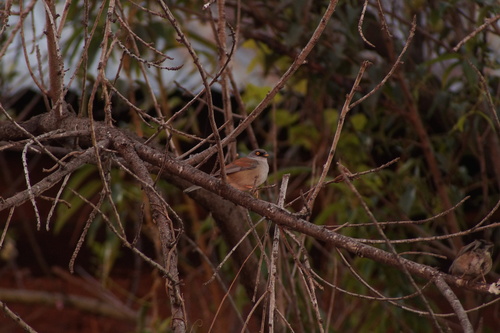 Yellow-eyed JuncoJunco phaeonotusThe yellow-eyed junco is about 16 cm (6.3 in) long.
Learn the Baird's Junco in the BeakBrain App
Photo and call practice. Coming soon to iPhone and Android.
Play today's Daily BirdEvery photo and recording on this page is credited to its author under the licence shown. Spotted a problem with this page, or have a better photo? Contribute.