Learn what every symbol on the card means.Full credits and sources at beakbrain.com/symbols
 WoodlandCavity nestSmall · 43 g


ID tip
The Australian owlet-nightjar is It is 21–25 cm long, making it a small to medium-sized owlet-nightjar with grey upperparts and a white, barred front and a distinct dark and pale patterning on the head. It has large dark eyes that are non-reflective when a light is shone upon them; unlike many other nocturnal birds. In Northern Australia, females can also have a rufous morph. It is possible that males also have a rufous morph in this area, but it is far less distinct in comparison to the female's. Voice: The Australian owlet-nightjar is frequently heard but not often seen. Adult Australian owlet-nightjars appear to have a few main calls described as: "churr, cry, yuk, cho-ok, hiss, screech and other short harsh rattling notes".
Text from Wikipedia, licensed CC BY-SA 4.0.
When to see the Australian Owlet-nightjar
One bar for each month, and every month is filled: this bird is recorded here in all twelve. The wide bar is March, the month with the most records.
Where to see the Australian Owlet-nightjar
The map shades 1 country with regular records, and 1 more in a lighter tone where the bird turns up only as a stray. Everything unshaded has no records. Countries are listed below the map.
Recorded as a rare visitor in Papua New Guinea.
About the Australian Owlet-nightjar
The Australian owlet-nightjar is a nocturnal bird found in open woodland across Australia and in southern New Guinea. It is the smallest nocturnal bird found in Australia, making it prone to predation. It is colloquially known as the moth owl or fairy owl and Jarlajirrpi by the Warlpiri people. It is the most common nocturnal bird in Australia. Despite suffering from predation and competition by introduced species, it is not considered threatened.
Text adapted from Wikipedia, licensed CC BY-SA 4.0.
Easily confused with
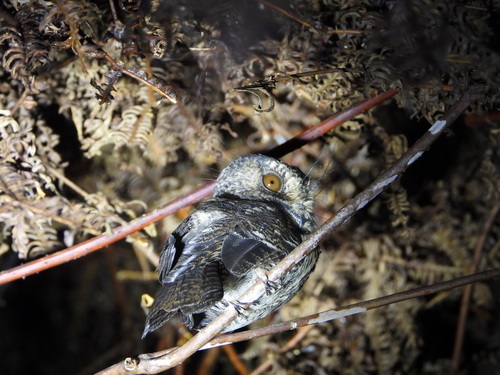 Mountain Owlet-nightjarAegotheles albertisiOwlet-nightjars have wide beak bills, short legs, and upright posture.
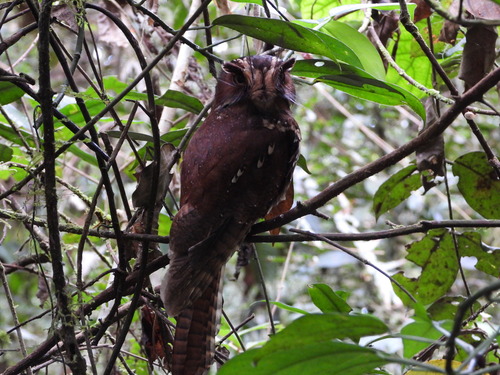 Feline Owlet-nightjarAegotheles insignisThe feline owlet-nightjar is the largest owlet-nightjar in New Guinea, having a length of 28-30 cm.
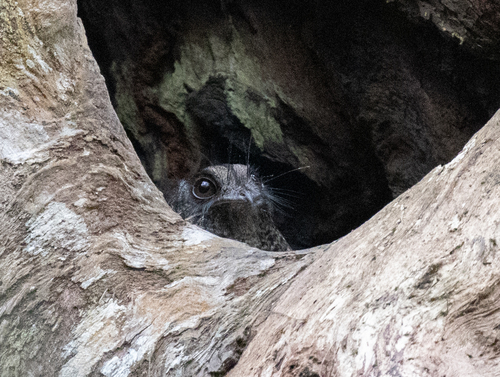 Barred Owlet-nightjarAegotheles bennettiiThe barred owlet-nightjar is a species of bird in the owlet-nightjar family Aegothelidae.
Learn the Australian Owlet-nightjar in the BeakBrain App
Photo and call practice. Coming soon to iPhone and Android.
Play today's Daily BirdEvery photo and recording on this page is credited to its author under the licence shown. Spotted a problem with this page, or have a better photo? Contribute.