Learn what every symbol on the card means.Full credits and sources at beakbrain.com/symbols
 ForestCup nestMedium · 108 g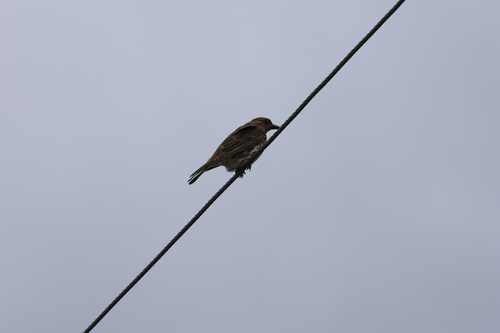
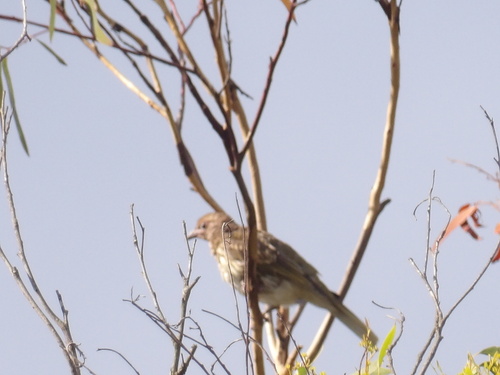
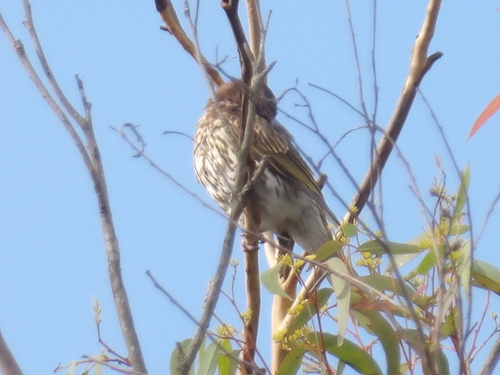


What the Australasian Figbird sounds like


ID tip
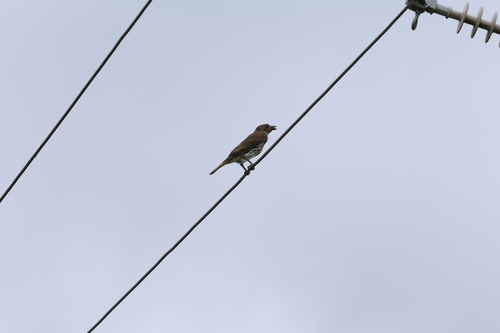
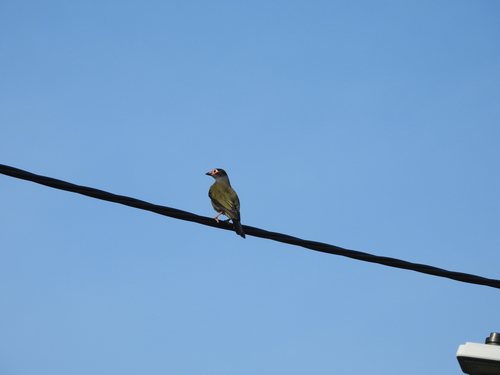
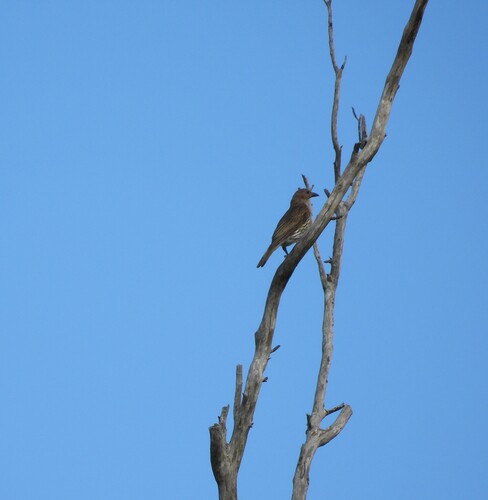
The Australasian figbird has a total length of 27.0–29.5 cm (10.6–11.6 in) and a jizz comparable to that of other orioles. With a body mass of around 111 to 130 g (3.9 to 4.6 oz), it is probably the largest of the Old World orioles. It is sexually dimorphic, and the racial differences are almost entirely limited to the male. Males of all subspecies have a black tail with broad white tips to the outer rectrices, white crissum (the undertail coverts surrounding the cloaca), blackish primaries, a black head, distinct bright red facial skin, a black bill with a red base, and pinkish legs.
Text from Wikipedia, licensed CC BY-SA 4.0.
When to see the Australasian Figbird
One bar for each month, and every month is filled: this bird is recorded here in all twelve. The wide bar is October, the month with the most records.
Where to see the Australasian Figbird
The map shades 3 countries with regular records. Everything unshaded has no records. Countries are listed below the map.
About the Australasian Figbird
The Australasian figbird, also known as the green figbird, is a conspicuous, medium-sized passerine bird native to a wide range of wooded habitats in northern and eastern Australia, southern New Guinea, and the Kai Islands. It is common in large parts of its range, and occurs in numerous protected areas. Consequently, it is rated as least concern by BirdLife International and the IUCN.
Text adapted from Wikipedia, licensed CC BY-SA 4.0.
Easily confused with
 Green FigbirdSphecotheres viridisIt resembles the more widespread Australian figbird, but is smaller, and except for the paler crissum (around the cloaca), the male is entirely yellow-olive below (including the throat).
Wetar FigbirdSphecotheres hypoleucusThe Wetar figbird is a species of bird in the family Oriolidae.
Green FigbirdSphecotheres viridisIt resembles the more widespread Australian figbird, but is smaller, and except for the paler crissum (around the cloaca), the male is entirely yellow-olive below (including the throat).
Wetar FigbirdSphecotheres hypoleucusThe Wetar figbird is a species of bird in the family Oriolidae.
Learn the Australasian Figbird in the BeakBrain App
Photo and call practice. Coming soon to iPhone and Android.
Play today's Daily BirdEvery photo and recording on this page is credited to its author under the licence shown. Spotted a problem with this page, or have a better photo? Contribute.