Learn what every symbol on the card means.Full credits and sources at beakbrain.com/symbols
 ForestCavity nestMedium · 160 g



ID tip
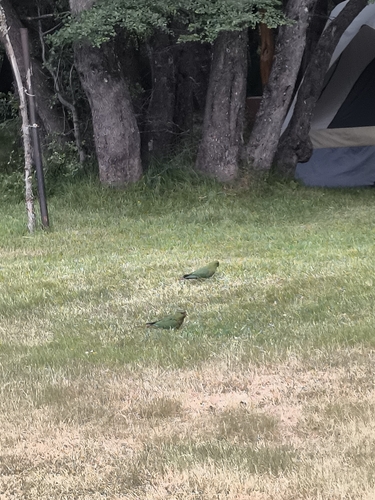
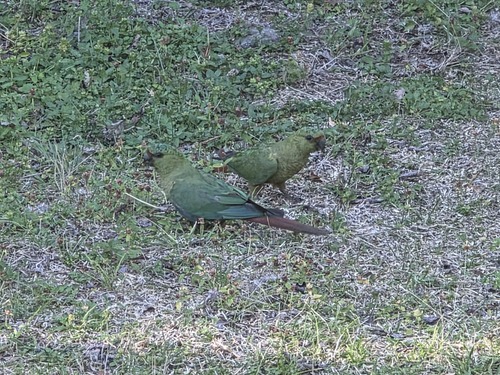
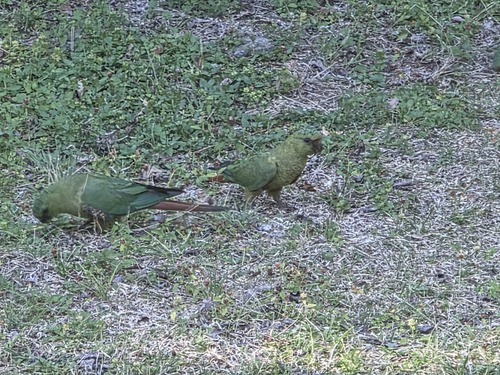
The austral parakeet is 28 to 36 cm (11 to 14 in) long; a specimen of a male E. f. minor weighed 155 g (5.5 oz). The sexes are the same. Adults of the nominate subspecies have a dull reddish forehead and lores in an otherwise yellow-green face. Their upperparts are dull green. Their underparts are yellowish green with a dull reddish patch on the belly; dark feather edges give a scaly appearance. Their tail is also dull reddish; their wings are mostly green with bluish green primaries. Immature birds are similar but the red of the face and belly are even duller. Subspecies E. f. Voice: The austral parakeet's most common call is "a nasal grating note, typically repeated in long series, e.g. "grrreh-grrreh-grrreh..."." It often mixes in a "more drawn-out higher-pitched "kreeh" ."
Text from Wikipedia, licensed CC BY-SA 4.0.
When to see the Austral Parakeet
One bar for each month, and every month is filled: this bird is recorded here in all twelve. The wide bar is January, the month with the most records.
Where to see the Austral Parakeet
The map shades 2 countries with regular records. Everything unshaded has no records. Countries are listed below the map.
About the Austral Parakeet
The austral parakeet, austral conure, cachaña, rawilma or emerald parakeet is a species of bird in subfamily Arinae of the family Psittacidae, the African and New World parrots. It is found in Argentina, Chile, and possibly the Falkland Islands.
Text adapted from Wikipedia, licensed CC BY-SA 4.0.
Easily confused with

Side by side: Austral Parakeet vs Burrowing Parrot · Austral Parakeet vs Slender-billed Parakeet
Learn the Austral Parakeet in the BeakBrain App
Photo and call practice. Coming soon to iPhone and Android.
Play today's Daily BirdEvery photo and recording on this page is credited to its author under the licence shown. Spotted a problem with this page, or have a better photo? Contribute.