Learn what every symbol on the card means.Full credits and sources at beakbrain.com/symbols
 WetlandCup nestTiny · 13 g


ID tip
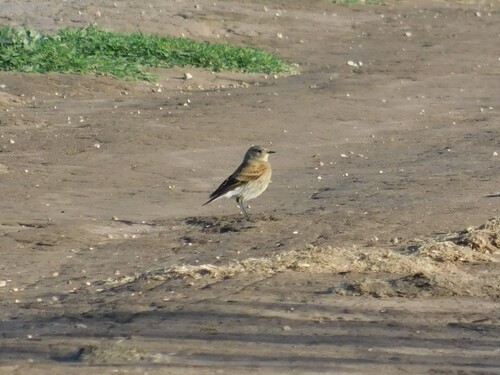
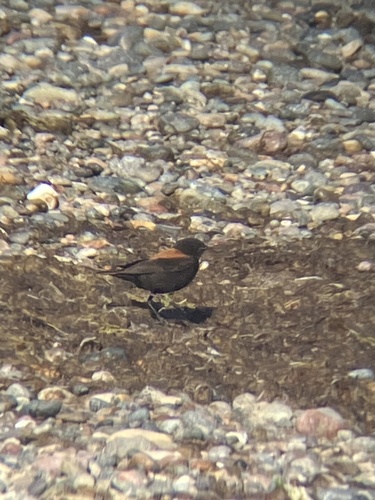
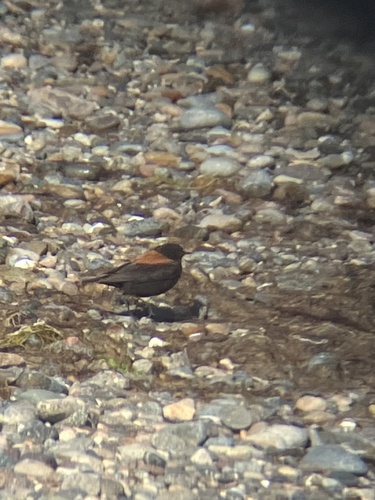
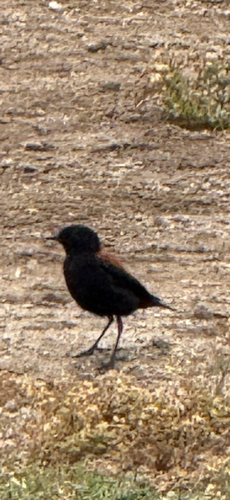
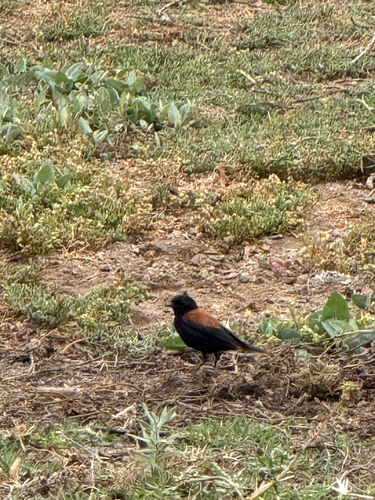
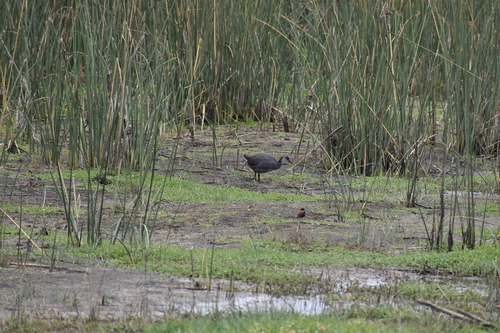
The austral negrito is 11.5 to 12.5 cm (4.5 to 4.9 in) long. Adult males are mostly black with a rufous-chestnut back. Their flight feathers are black without the pale inner webs that the Andean negrito has. Adult females are smaller than males. They have a brownish gray crown, a white supercilium and cheek, and a dark brown "collar" on their nape and upper back. Their lower back is dull rufous-brown. Their wings and tail are black with whitish edges on the outer web of the outermost tail feathers. Voice: The austral negrito is not highly vocal. Its alarm call is "a repeated tjit-tjit" and its contact call "a short twitter". Males call "sipsipsipsip-sereen" during their display flight.
Text from Wikipedia, licensed CC BY-SA 4.0.
When to see the Austral Negrito
One bar for each month. Filled bars are the 9 months with records; pale bars are months with none. The wide bar is November, the month with the most records.
Where to see the Austral Negrito
The map shades 6 countries with regular records. Everything unshaded has no records. Countries are listed below the map.
About the Austral Negrito
The austral negrito or Patagonian negrito is a species of bird in the family Tyrannidae, the tyrant flycatchers. It is found in Argentina, Bolivia, Brazil, Chile, Paraguay, and Uruguay and has occurred as a vagrant in Peru and on the Falkland Islands.
Text adapted from Wikipedia, licensed CC BY-SA 4.0.
Easily confused with

Side by side: Austral Negrito vs Fire-eyed Diucon · Austral Negrito vs Long-tailed Tyrant · Andean Negrito vs Austral Negrito
Learn the Austral Negrito in the BeakBrain App
Photo and call practice. Coming soon to iPhone and Android.
Play today's Daily BirdEvery photo and recording on this page is credited to its author under the licence shown. Spotted a problem with this page, or have a better photo? Contribute.