Learn what every symbol on the card means.Full credits and sources at beakbrain.com/symbols
 ForestGround nestTiny · 9 g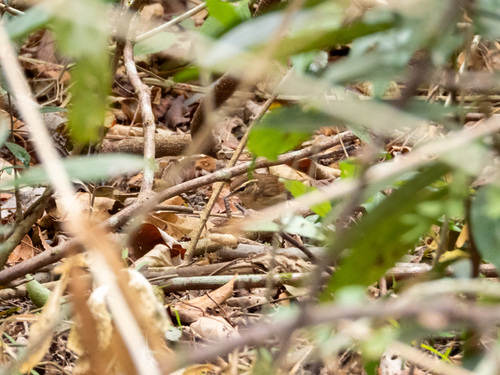
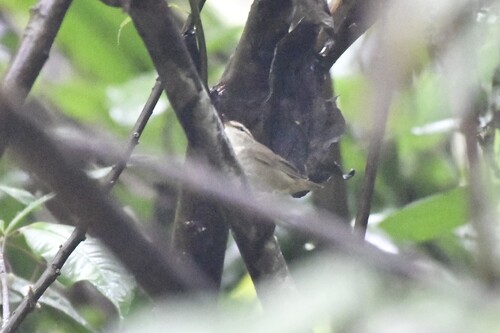
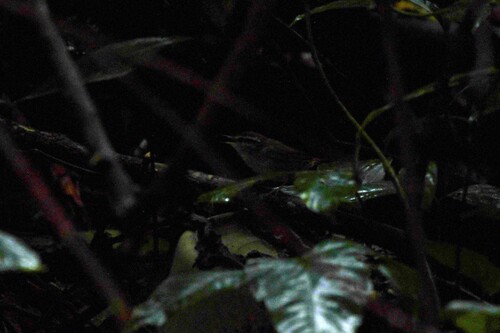
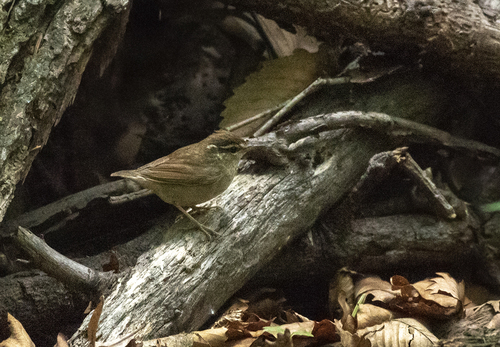
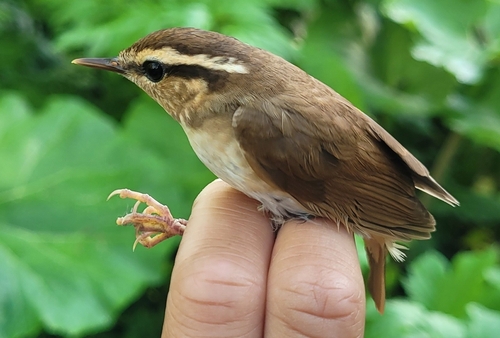
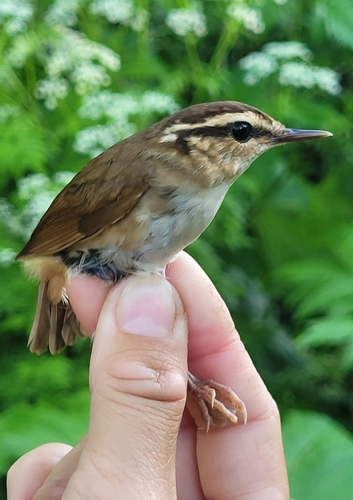
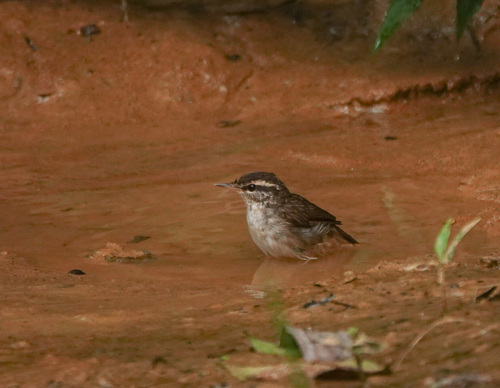


ID tip
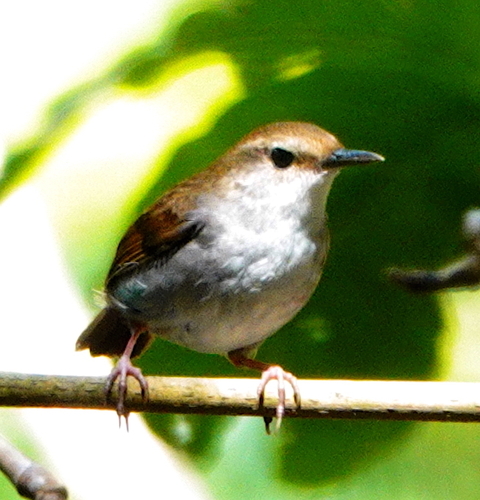
It is a small bird with a short tail. Males and females are similar in color, as well as juveniles after fledging; they are brown all over with a paler underpart and a darker brown crest and eyeline. Voice: Breeding males produce a high-pitched shee-shee-shee-shee or cee-cee-cee, while both males and females make a call similar to chott-chott-chott.
Text from Wikipedia, licensed CC BY-SA 4.0.
When to see the Asian Stubtail
One bar for each month. Filled bars are the 9 months with records; pale bars are months with none. The wide bar is May, the month with the most records.
Where to see the Asian Stubtail
The map shades 14 countries with regular records, and 2 more in a lighter tone where the bird turns up only as a stray. Everything unshaded has no records. Countries are listed below the map.
About the Asian Stubtail
The Asian stubtail is a bird in the family Cettiidae. The species was first described by Robert Swinhoe in 1863. It breeds in Northeast Asia and Japan. Its natural habitat is temperate forest.
Text adapted from Wikipedia, licensed CC BY-SA 4.0.
Easily confused with
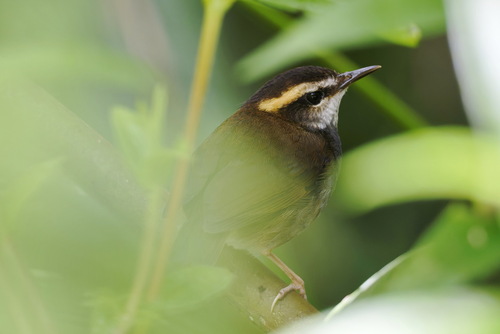 Bornean StubtailUrosphena whiteheadiThe Bornean stubtail is a very small warbler with long legs and a very short tail, measuring 9.5–10 cm (3.7–3.9 in) in length and having an average mass of 10.4 g (0.37 oz).
 Timor StubtailUrosphena subulataThe Timor stubtail is a species of bird in the family Cettiidae.
Learn the Asian Stubtail in the BeakBrain App
Photo and call practice. Coming soon to iPhone and Android.
Play today's Daily BirdEvery photo and recording on this page is credited to its author under the licence shown. Spotted a problem with this page, or have a better photo? Contribute.