Learn what every symbol on the card means.Full credits and sources at beakbrain.com/symbols
 ShrublandCup nestTiny · 8 g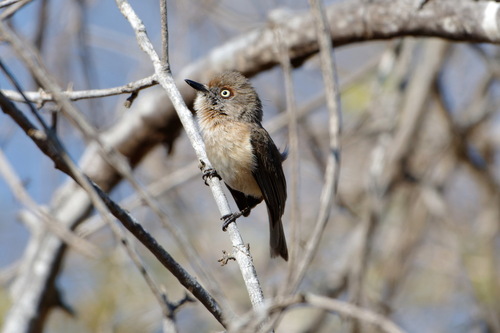
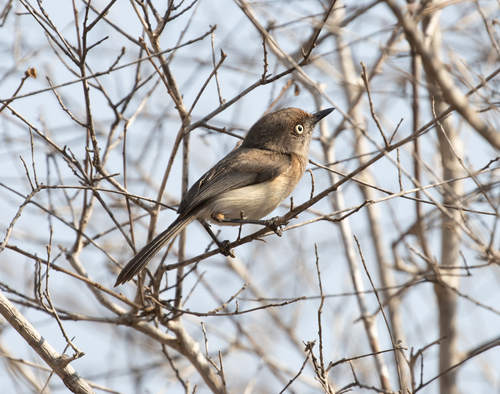
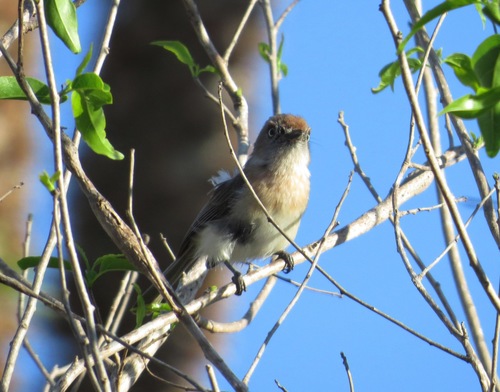

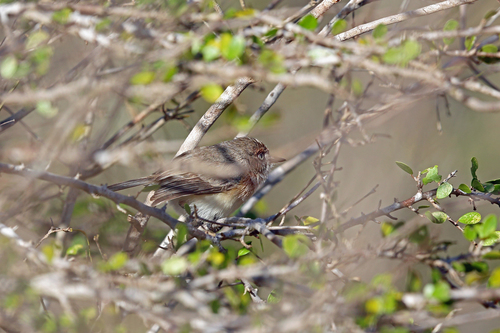
ID tip
It is a small, short-winged, and long-legged bird with a short and slender beak. It is 12 cm (4.7 in) long and weighs 7.2–8.3 g (0.25–0.29 oz). The average bill length is 13.5 mm (0.53 in). The top of the head and the upperparts are greyish brown, with a rufous wash on the forecrown and a dark rufous ring around the eyes. The central chin and throat are buffy white, along with the belly and undertail coverts. The breast and flanks are cinnamon buff. The cheeks and auriculars are greyish brown and the tail is grey brown. It has a black bill with pale yellow eyes. Voice: Songs are generally made from concealed perches. Their calls have been described as "a rapid series of strong, rather low-pitched whistles". The songs are distinctive variable warbles composed of 4-5 syllables, either "tee-too tekhew" or "chichichich wit-tee tew". Other calls include "tchiew". Songs are described as varying from individual to individual.
Text from Wikipedia, licensed CC BY-SA 4.0.
When to see the Archbold's Newtonia
One bar for each month. Filled bars are the 5 months with records; pale bars are months with none. The wide bar is November, the month with the most records.
Where to see the Archbold's Newtonia
The map shades 1 country with regular records. Everything unshaded has no records. Countries are listed below the map.
About the Archbold's Newtonia
Archbold's newtonia is a species of bird in the family Vangidae. It is endemic to Madagascar. Its natural habitats are subtropical or tropical dry forests and subtropical or tropical dry shrubland. The birds have a greyish brown back and tail, with a rufous forecrown and a buffy white belly, throat, and undertail coverts. They have a conspicuous rufous eye-ring, accompanied with a black bill and pale yellow eyes. The species is sexually monomorphic, and there is no major difference between the sexes. There is no breeding plumage for the males.
Text adapted from Wikipedia, licensed CC BY-SA 4.0.
Easily confused with
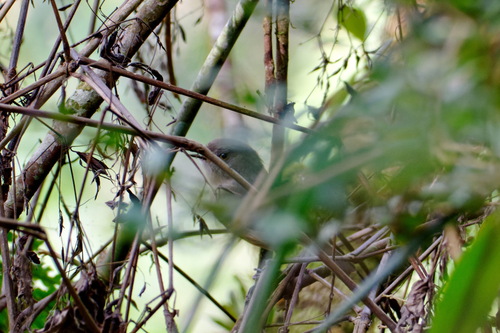 Dark NewtoniaNewtonia amphichroaThe dark newtonia is a species of bird in the family Vangidae.
Red-tailed NewtoniaNewtonia fanovanaeThe red-tailed newtonia is a species of bird in the family Vangidae.
Dark NewtoniaNewtonia amphichroaThe dark newtonia is a species of bird in the family Vangidae.
Red-tailed NewtoniaNewtonia fanovanaeThe red-tailed newtonia is a species of bird in the family Vangidae.
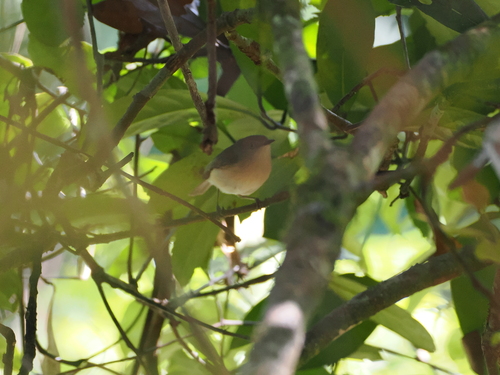 Common NewtoniaNewtonia brunneicaudaIt is a small, short-winged, warbler like bird with relatively long legs.
Learn the Archbold's Newtonia in the BeakBrain App
Photo and call practice. Coming soon to iPhone and Android.
Play today's Daily BirdEvery photo and recording on this page is credited to its author under the licence shown. Spotted a problem with this page, or have a better photo? Contribute.