Learn what every symbol on the card means.Full credits and sources at beakbrain.com/symbols
 ForestCavity nestSmall · 15 g


ID tip
ʻApapane are small at 13 cm (5.1 in) when fully grown. They are sexually dimorphic in size: male ʻapapane have a mass of 16 g (0.56 oz), while females average 14.4 g (0.51 oz). Adult ʻapapane are overall bright crimson, with distinct white undertail-coverts and lower abdomen feathers. They have black primaries and retricies. Juvenile ʻapapane are yellow-brown and gray, with the same white plumage as adults, and molt into crimson plumage over the course of two years. 'Apapane are often seen in a tail-up posture, showing off their white feathers. Voice: ʻApapane are active singers, including in flight. There is considerable variation in their calls and songs, but phrases are often repeated. They are known to sing at a perch for 10-30 second intervals, and their song may include repeated squeaks, whistles, rasps, melodic trills, and clicking sounds.
Text from Wikipedia, licensed CC BY-SA 4.0.
When to see the Apapane
One bar for each month, and every month is filled: this bird is recorded here in all twelve. The wide bar is March, the month with the most records.
Where to see the Apapane
The map shades 1 country with regular records. Everything unshaded has no records. Countries are listed below the map.
About the Apapane
The ʻapapane is a small, crimson species of Hawaiian honeycreeper endemic to the Hawaiian Islands. They are the most abundant and widely distributed honeycreeper and are found on the islands of Hawaiʻi, Maui, Lānaʻi, Kauaʻi, Molokaʻi and Oʻahu.
Text adapted from Wikipedia, licensed CC BY-SA 4.0.
Easily confused with
 Elegant EuphoniaChlorophonia elegantissimaThe elegant euphonia is 10 cm (3.9 in) long and weighs 13 to 17 g (0.46 to 0.60 oz).
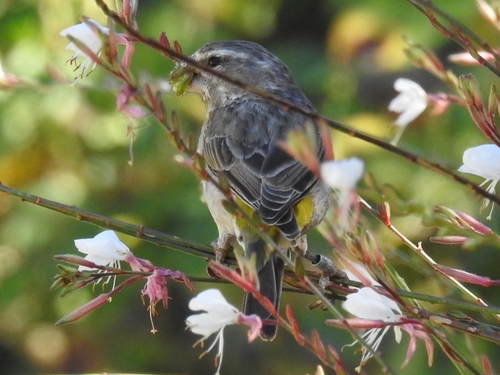 White-throated CanaryCrithagra albogularisThe white-throated canary is a small bird about 15 cm long with generally dull-coloured plumage and a yellow or yellow-green rump.
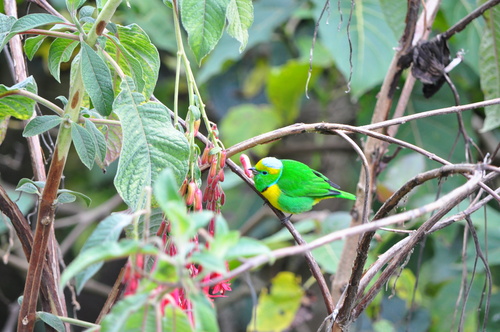 Golden-browed ChlorophoniaChlorophonia callophrysThe blue-crowned chlorophonia is a chunky, short-tailed, stubby-billed bird.
Side by side: Apapane vs Elegant Euphonia · Apapane vs White-throated Canary · Apapane vs Golden-browed Chlorophonia
Learn the Apapane in the BeakBrain App
Photo and call practice. Coming soon to iPhone and Android.
Play today's Daily BirdEvery photo and recording on this page is credited to its author under the licence shown. Spotted a problem with this page, or have a better photo? Contribute.