Learn what every symbol on the card means.Full credits and sources at beakbrain.com/symbols
 WetlandGround nestMedium · 120 g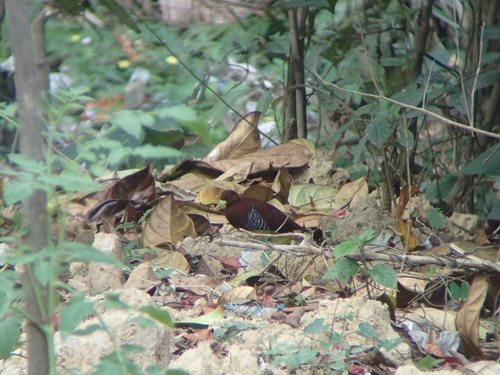
ID tip
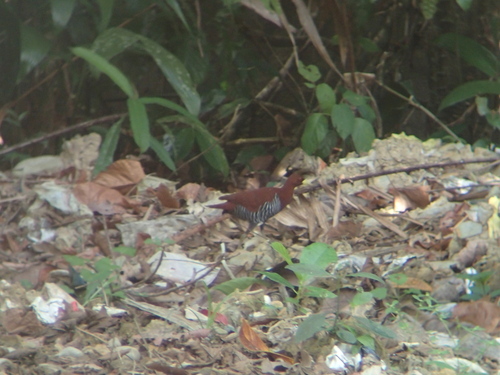
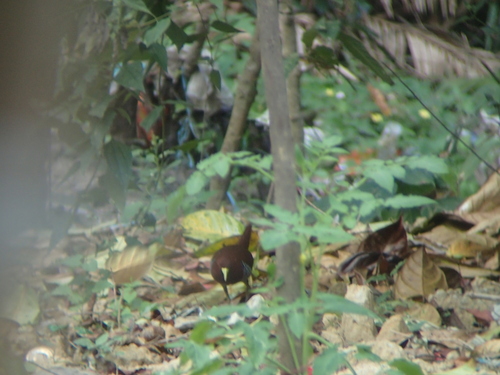
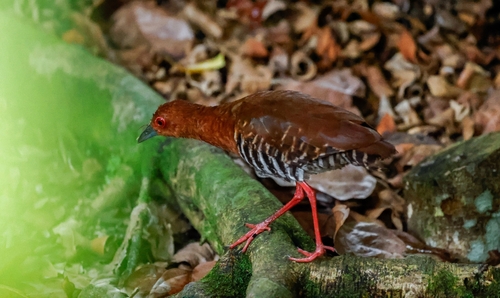
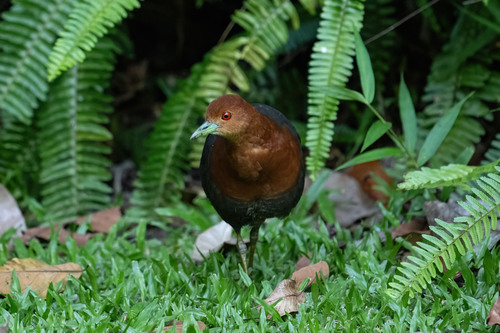
This is the largest Rallina, measuring about 34 cm in length. It has a glossy chestnut plumage, extensive bold barring on underparts, unbarred undertail-coverts, relatively bright apple-green bill and relatively long and fluffy tail; legs and feet are olive-green. It also has pale barring on wings confined to outer primaries and greater and medium coverts. Juveniles are duller and less prominently barred. Other similar looking crakes include other Rallina and ruddy-breasted crake Porzana fusca. They are smaller and do not have green bill and legs.
Text from Wikipedia, licensed CC BY-SA 4.0.
When to see the Andaman Crake
One bar for each month. Filled bars are the 7 months with records; pale bars are months with none. The wide bar is December, the month with the most records.
Where to see the Andaman Crake
The map shades 1 country with regular records. Everything unshaded has no records. Countries are listed below the map.
About the Andaman Crake
The Andaman crake is a bird species in the family Rallidae. It is endemic to the Andaman Islands of the eastern Indian Ocean.
Text adapted from Wikipedia, licensed CC BY-SA 4.0.
Easily confused with

Learn the Andaman Crake in the BeakBrain App
Photo and call practice. Coming soon to iPhone and Android.
Play today's Daily BirdEvery photo and recording on this page is credited to its author under the licence shown. Spotted a problem with this page, or have a better photo? Contribute.