Learn what every symbol on the card means.Full credits and sources at beakbrain.com/symbols
 ForestDomed nestMedium · 234 g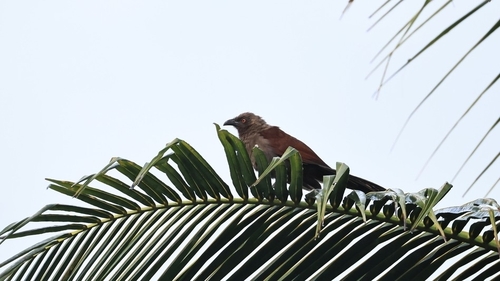


ID tip
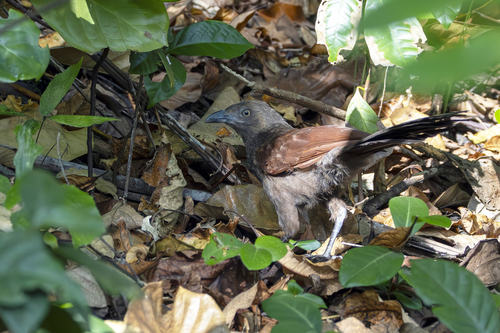
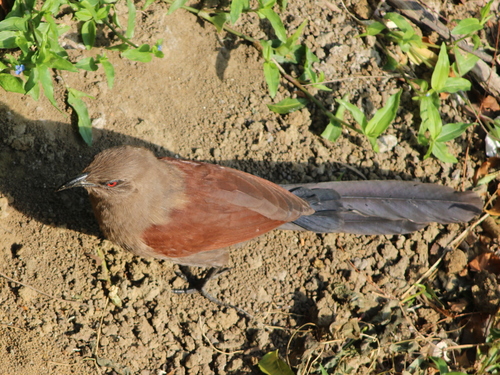
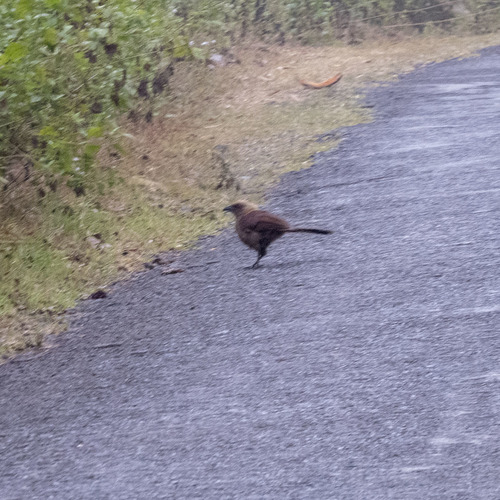
It is a large coucal, with males being around 380–400 mm (12.6-15.7 inches) and females somewhat larger at 400–420 mm (15.7-16.5 inches) in length. Structurally, it closely resembles the greater coucal (Centropus sinensis), except that its plumage is a fawn brown as opposed to the black with bluish-purple sheen seen in C. sinensis. It has a chestnut rear mantle and wings and the head is pale tawny brown. The mantle and breast grade from pale to dark brown on the belly and vent. The iris is pale brown. The tail is a pale brown at the base and dark violet-brown towards the tip.
Text from Wikipedia, licensed CC BY-SA 4.0.
When to see the Andaman Coucal
One bar for each month. Filled bars are the 10 months with records; pale bars are months with none. The wide bar is February, the month with the most records.
Where to see the Andaman Coucal
The map shades 1 country with regular records. Everything unshaded has no records. Countries are listed below the map.
About the Andaman Coucal
The Andaman coucal or brown coucal is a species of non-parasitic cuckoo found in the Andamans, Coco and Table Islands. It is sometimes treated as a subspecies of the greater coucal. It is found mainly in forested habitats and thickly covered gardens.
Text adapted from Wikipedia, licensed CC BY-SA 4.0.
Easily confused with
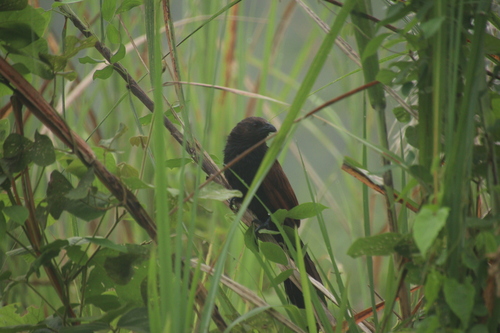 Philippine CoucalCentropus viridisThe Philippine coucal is a species of cuckoo in the family Cuculidae.
 Malagasy CoucalCentropus toulouThe Malagasy coucal is a medium-sized bird with the adult length being in the range 40 to 50 cm (16 to 20 in).
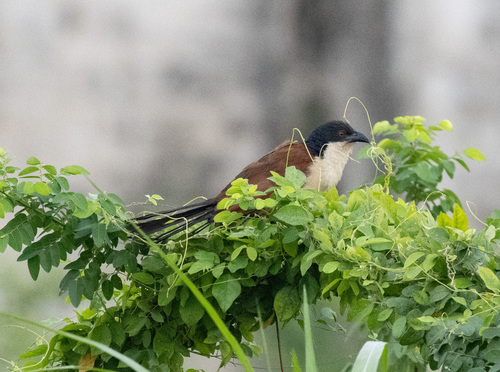 Blue-headed CoucalCentropus monachusThe blue-headed coucal is a medium-sized species growing to 45 to 52 cm (18 to 20 in) in length.
Side by side: Andaman Coucal vs Senegal Coucal · Andaman Coucal vs Malagasy Coucal · Andaman Coucal vs Blue-headed Coucal · Andaman Coucal vs Coppery-tailed Coucal
Learn the Andaman Coucal in the BeakBrain App
Photo and call practice. Coming soon to iPhone and Android.
Play today's Daily BirdEvery photo and recording on this page is credited to its author under the licence shown. Spotted a problem with this page, or have a better photo? Contribute.