Learn what every symbol on the card means.Full credits and sources at beakbrain.com/symbols
 ForestTiny · 11 g
What the Ancient Antwren sounds like


ID tip
The ancient antwren is small passerine, with a total length of 10-11 centimeters (4 in) and weight of 10.2-11 grams. Sexual dimorphism is present in this species, but not as apparent when compared to other members of this genus. Adult males have solid black crowns with a bold yellowish supercilium, dark gray upperparts and rump, and yellowish throat and underparts. Females and subadults display whitish or yellow spots on the crown and generally have darker olive breasts and sides than adult males. Voice: The ancient antwren's song is described as a long decelerating series of notes that rises slightly in frequency, then decreases. This song is distinct from other members of this genus save for Todd's antwren.
Text from Wikipedia, licensed CC BY-SA 4.0.
When to see the Ancient Antwren
One bar for each month. Filled bars are the 10 months with records; pale bars are months with none. The wide bar is January, the month with the most records.
Where to see the Ancient Antwren
The map shades 2 countries with regular records. Everything unshaded has no records. Countries are listed below the map.
About the Ancient Antwren
The ancient antwren is a species of tropical bird in the family Thamnophilidae. It is primarily found in terra firme forests of northern Peru and southeastern Ecuador. This species was described in 1998 and named after the American botanist Alwyn Gentry. Habitat loss poses the greatest threat to this species.
Text adapted from Wikipedia, licensed CC BY-SA 4.0.
Easily confused with
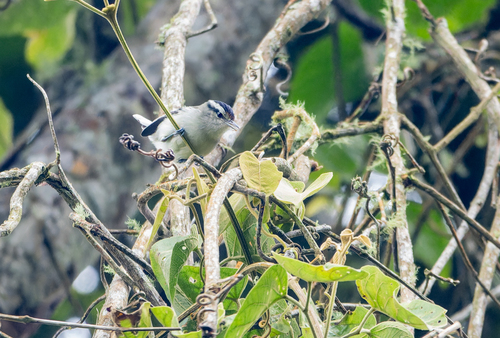 Creamy-bellied AntwrenHerpsilochmus motacilloidesThe creamy-bellied antwren is about 12 cm (4.7 in) long and weighs about 10.5 to 13 g (0.37 to 0.46 oz).
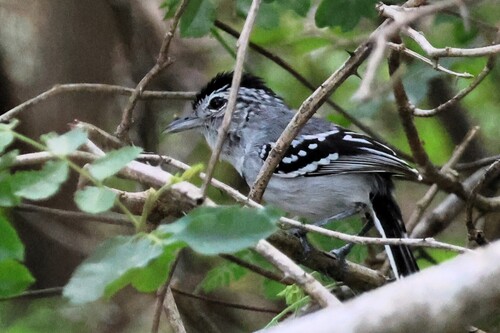 Pectoral AntwrenHerpsilochmus pectoralisThe pectoral antwren is 11 to 12 cm (4.3 to 4.7 in) long.
 Roraiman AntwrenHerpsilochmus roraimaeThe Roraiman antwren is 12 to 13 cm (4.7 to 5.1 in) long and has the longest tail within genus Herpsilochmus.
Learn the Ancient Antwren in the BeakBrain App
Photo and call practice. Coming soon to iPhone and Android.
Play today's Daily BirdEvery photo and recording on this page is credited to its author under the licence shown. Spotted a problem with this page, or have a better photo? Contribute.