Learn what every symbol on the card means.Full credits and sources at beakbrain.com/symbols
 WetlandCup nestMedium · 162 g




ID tip
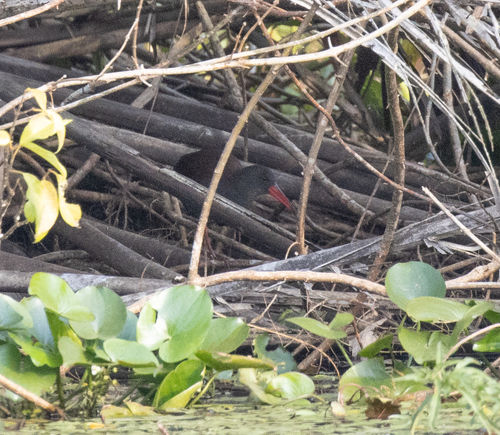
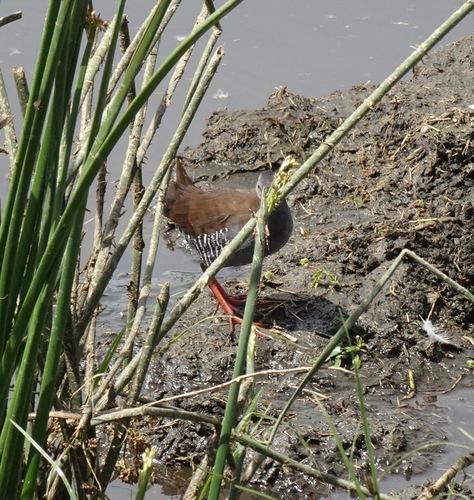
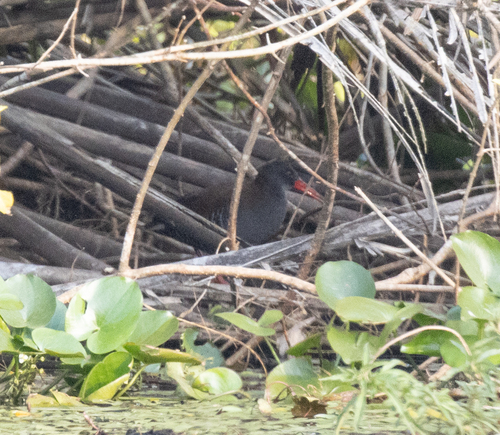
Adults are 27–28 cm (10.6–11.0 in) long, and have mainly brown upperparts and blue-grey underparts, with black-and-white barring on the flanks and undertail. The sexes have similar plumage but the female is smaller. This is the only Rallus species with a plain back. The body is flattened laterally to allow easier passage through the reeds. They have long toes, a short tail and a long slim dull red bill. The legs are red. Immature birds are similar to the adults, but the blue-grey is replaced by buff. They are noisy birds, with a trilled whistled treee-tee-tee-tee-tee call.
Text from Wikipedia, licensed CC BY-SA 4.0.
When to see the African Rail
One bar for each month, and every month is filled: this bird is recorded here in all twelve. The wide bar is October, the month with the most records.
Where to see the African Rail
The map shades 16 countries with regular records, and 2 more in a lighter tone where the bird turns up only as a stray. Everything unshaded has no records. Countries are listed below the map.
Recorded as a rare visitor in Congo - Brazzaville, Congo - Kinshasa.
About the African Rail
The African rail, sometimes also Kaffir rail, is a small wetland bird of the rail family that is found in eastern and southern Africa.
Text adapted from Wikipedia, licensed CC BY-SA 4.0.
Easily confused with
 Brown-cheeked RailRallus indicusThe species differs from the slightly smaller nominate form through its paler upperparts, brown-tinged underparts and a brown stripe through the eye.
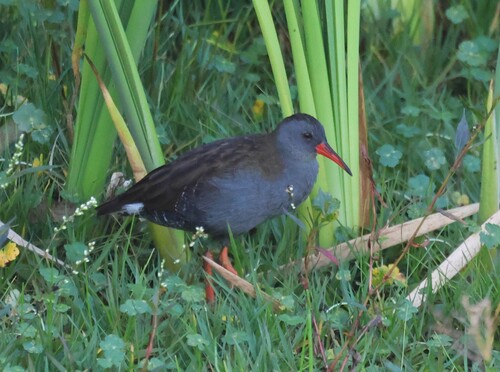 Bogota RailRallus semiplumbeusThe Bogotá rail is a typical member of the genus Rallus, with a long and slightly decurved bill, a plump body, and a short tail.
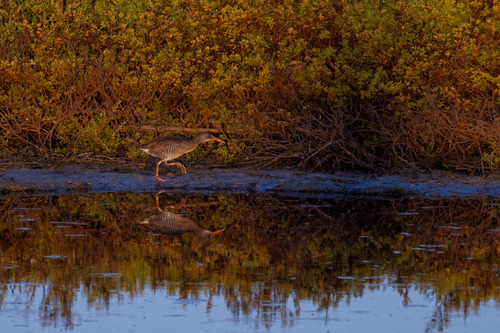 Mangrove RailRallus longirostrisThe mangrove rail is about 33 cm (13 in) long and weighs 260 to 310 g (9.2 to 11 oz).
Side by side: African Rail vs King Rail · African Rail vs Brown-cheeked Rail · African Rail vs Bogota Rail · African Rail vs Mangrove Rail
Learn the African Rail in the BeakBrain App
Photo and call practice. Coming soon to iPhone and Android.
Play today's Daily BirdEvery photo and recording on this page is credited to its author under the licence shown. Spotted a problem with this page, or have a better photo? Contribute.