Learn what every symbol on the card means.Full credits and sources at beakbrain.com/symbols
 ShrublandCup nestTiny · 14 g



ID tip
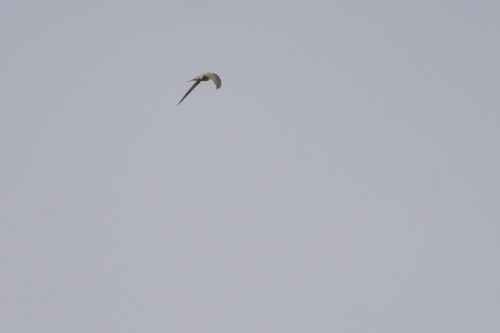
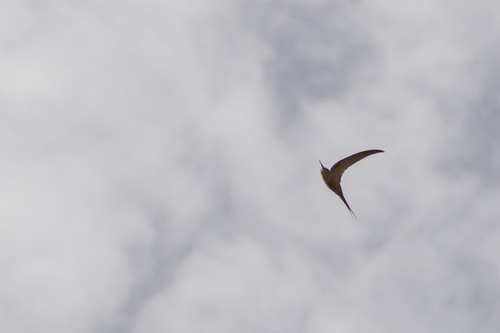
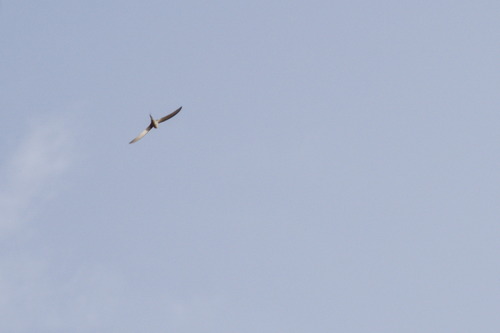
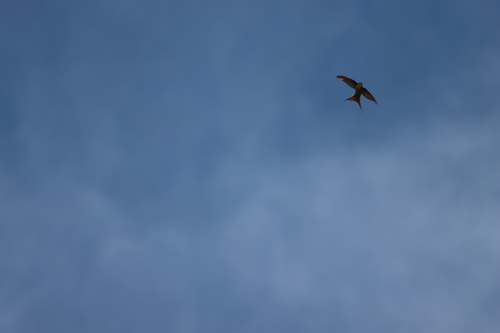
This 16 cm long species is mainly pale brown in colour. It has long swept-back wings that resemble a crescent or a boomerang. The body is slender, and the tail is long and deeply forked, although it is usually held closed. The call is a loud, shrill scream. Sexes are similar, and young birds differ mainly in their shorter tails. Palm swifts have very short legs which they use only for clinging to vertical surfaces, since swifts never settle voluntarily on the ground.
Text from Wikipedia, licensed CC BY-SA 4.0.
When to see the African Palm Swift
One bar for each month, and every month is filled: this bird is recorded here in all twelve. The wide bar is November, the month with the most records.
Where to see the African Palm Swift
The map shades 47 countries with regular records. Everything unshaded has no records. Countries are listed below the map.
About the African Palm Swift
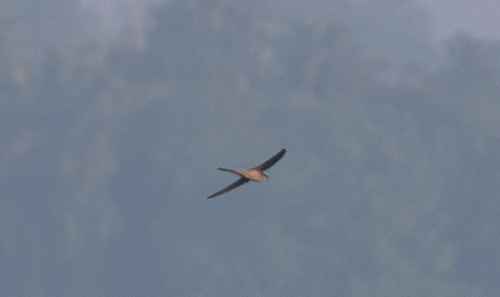
The African palm swift is a small swift. It is very similar to the Asian palm swift, Cypsiurus balasiensis, and was formerly considered to be the same species. The Malagasy palm swift was also recently split from this species. This is a common species with a very wide distribution which faces no obvious threats and may be increasing in numbers as a result of the cultivation of the exotic Washington palm, so the International Union for Conservation of Nature has rated its conservation status as being of "least concern".
Text adapted from Wikipedia, licensed CC BY-SA 4.0.
Easily confused with
Learn the African Palm Swift in the BeakBrain App
Photo and call practice. Coming soon to iPhone and Android.
Play today's Daily BirdEvery photo and recording on this page is credited to its author under the licence shown. Spotted a problem with this page, or have a better photo? Contribute.