Learn what every symbol on the card means.Full credits and sources at beakbrain.com/symbols
 WetlandPlatform nestLarge · 507 g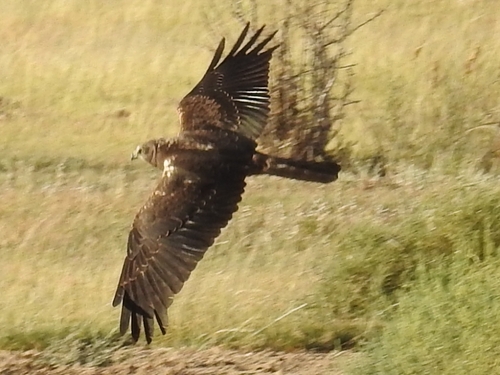
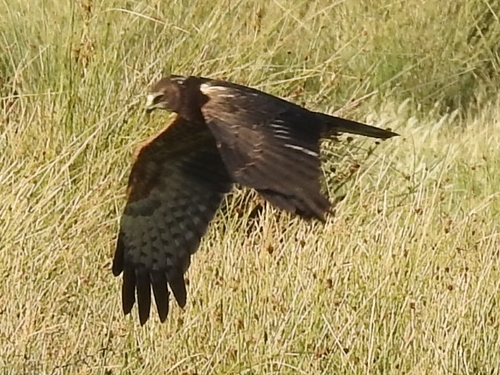
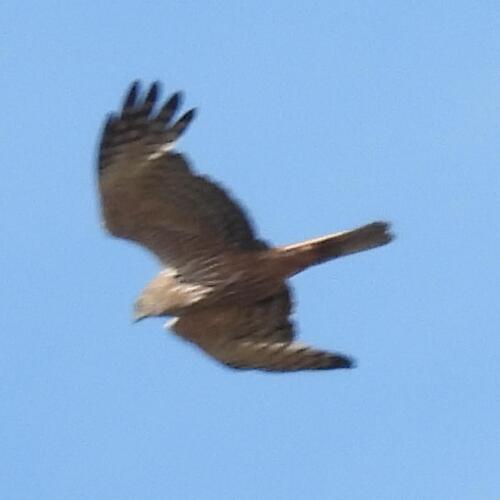
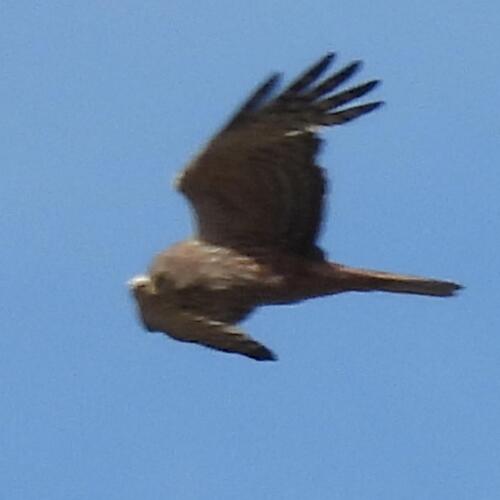
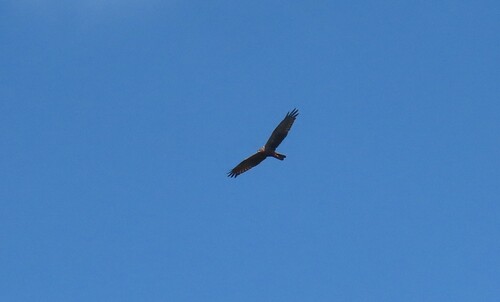
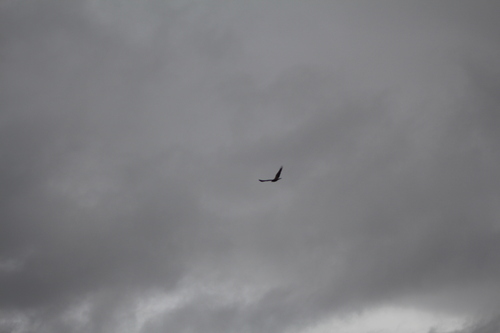
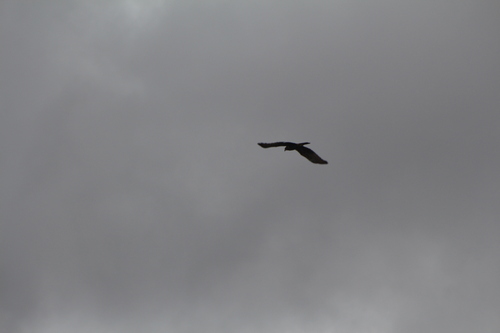


ID tip
African Marsh harrier females are larger than males and they are 44–47 centimetres (17–19 in) in length, with females being about 30% heavier than males (Simmons and Simmons 2000). Adults, (like the male bird right) have yellow eyes, but brown eyes when immature. Both sexes are mostly brown with pale streakings on the head, breast, forewing and rufous on the thighs and the belly. Adult males differ from females in that they have a pale grey wash to the dorsal secondaries and primaries. The female's are brown.
Text from Wikipedia, licensed CC BY-SA 4.0.
When to see the African Marsh Harrier
One bar for each month, and every month is filled: this bird is recorded here in all twelve. The wide bar is November, the month with the most records.
Where to see the African Marsh Harrier
The map shades 19 countries with regular records. Everything unshaded has no records. Countries are listed below the map.
About the African Marsh Harrier
The African marsh harrier is a bird of prey belonging to the harrier genus Circus. It is largely resident in wetland habitats in southern, central and eastern Africa from South Africa north to South Sudan.
Text adapted from Wikipedia, licensed CC BY-SA 4.0.
Easily confused with
 Cinereous HarrierCircus cinereusThe male's plumage is dark grey above with black wingtips and a white rump.
 Long-winged HarrierCircus buffoniThe long-winged is mid-sized bird of prey, and like most birds of prey species, the females are larger than the males.
 Eastern Marsh HarrierCircus spilonotusIt is 48 to 58 cm long with a wingspan of 113 to 137 cm; like most birds of prey, the female is usually larger than the male.
Side by side: African Marsh Harrier vs Eastern Marsh Harrier · African Marsh Harrier vs Long-winged Harrier · African Marsh Harrier vs Cinereous Harrier · African Marsh Harrier vs Spotted Harrier
Learn the African Marsh Harrier in the BeakBrain App
Photo and call practice. Coming soon to iPhone and Android.
Play today's Daily BirdEvery photo and recording on this page is credited to its author under the licence shown. Spotted a problem with this page, or have a better photo? Contribute.