Learn what every symbol on the card means.Full credits and sources at beakbrain.com/symbols
 Rocky22 g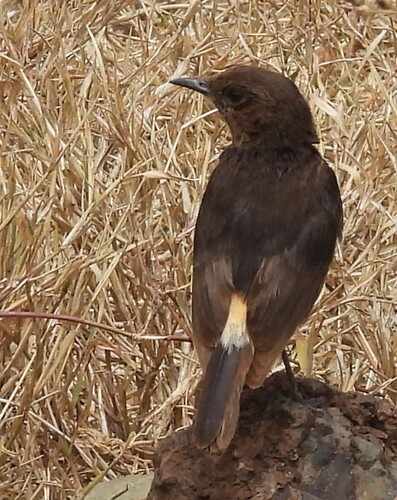
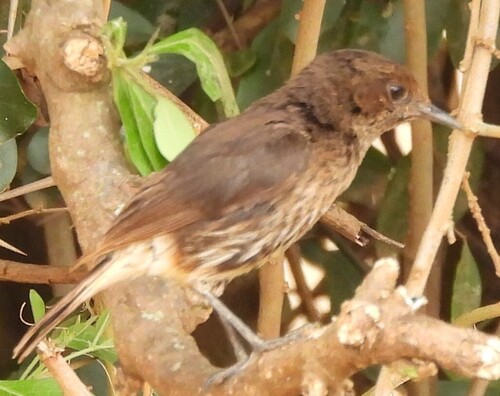
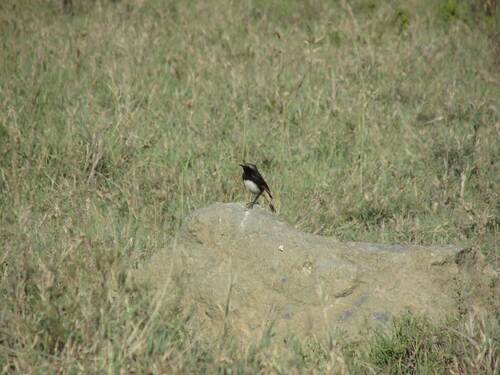
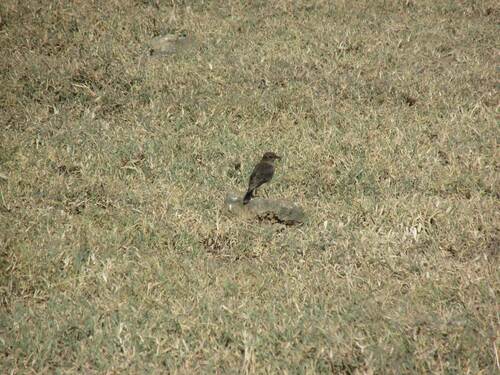
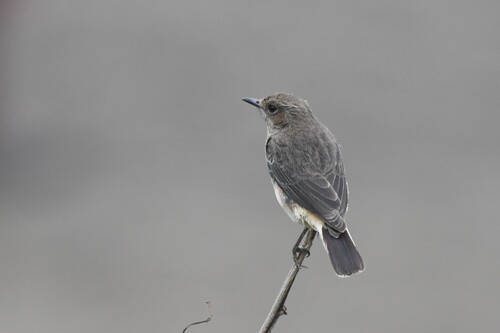
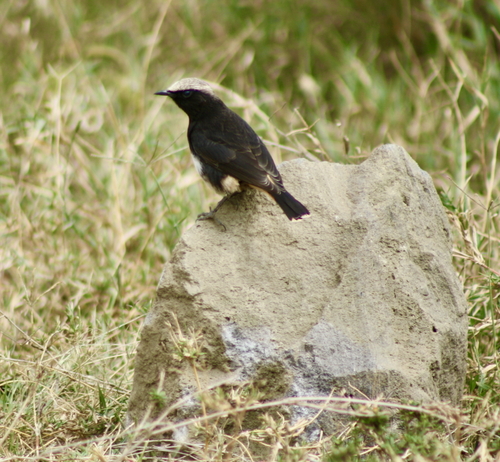
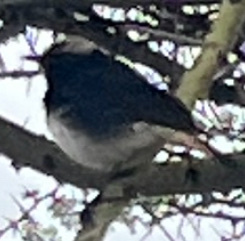


ID tip
The Abyssinian wheatear is a dark wheatear which shows sexual dichromatism, with the males being darker than the females. The males have black upperparts, throat and breast and a grey cap with darker streaks. The colour of the belly varies, both within individuals and geographic populations, from white to black. The females are mainly dark brown with heavy streaking on their paler breast and belly. Both males and females have buff under tail coverts, and the tail has a black inverted T pattern on a buff background, best seen in flight. The length of the nominate subspecies is 14 cm (5.5 in).
Text from Wikipedia, licensed CC BY-SA 4.0.
When to see the Abyssinian Wheatear
One bar for each month, and every month is filled: this bird is recorded here in all twelve. The wide bar is November, the month with the most records.
Where to see the Abyssinian Wheatear
The map shades 5 countries with regular records. Everything unshaded has no records. Countries are listed below the map.
About the Abyssinian Wheatear
The Abyssinian wheatear, or Abyssinian black wheatear, is a species of bird in the family Muscicapidae, the Old World flycatchers and chats. It is found from Ethiopia to southern Kenya and north-eastern Tanzania.
Text adapted from Wikipedia, licensed CC BY-SA 4.0.
Easily confused with
 Red-rumped WheatearOenanthe moestaThe red-rumped wheatear is a compact, big-headed wheatear with a rufous rump and all dark tail. the male has a grey crown and nape with a black throat and face and white supercilium.
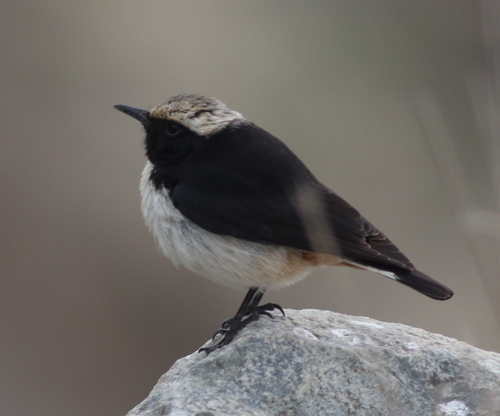 Arabian WheatearOenanthe lugentoidesThe Arabian wheatear is a species of bird in the family Muscicapidae.
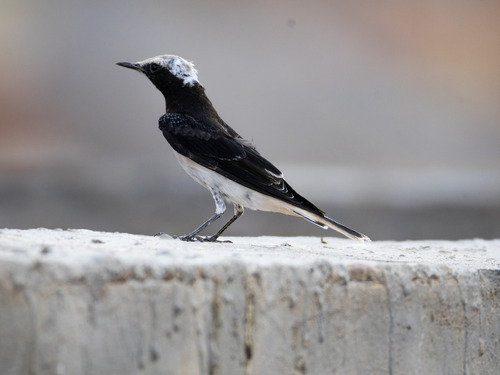 Hooded WheatearOenanthe monachaThis wheatear has a body length of 15.5–17 cm (6.1–6.7 in), a wingspan of 29–30 cm (11–12 in), and weighs 18–20 grams (0.63–0.71 oz).
Learn the Abyssinian Wheatear in the BeakBrain App
Photo and call practice. Coming soon to iPhone and Android.
Play today's Daily BirdEvery photo and recording on this page is credited to its author under the licence shown. Spotted a problem with this page, or have a better photo? Contribute.