Learn what every symbol on the card means.Full credits and sources at beakbrain.com/symbols
 ForestCup nestMedium · 67 g


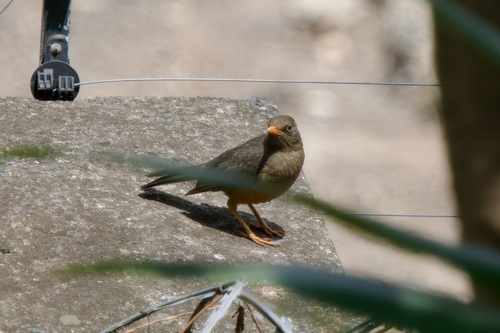
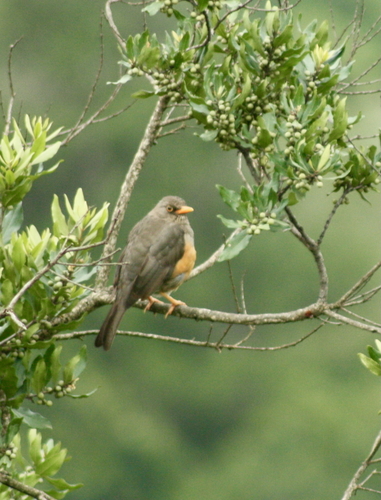
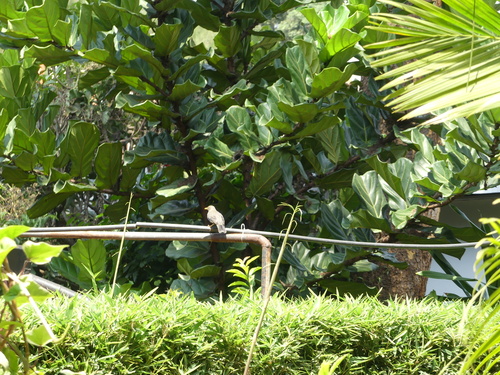
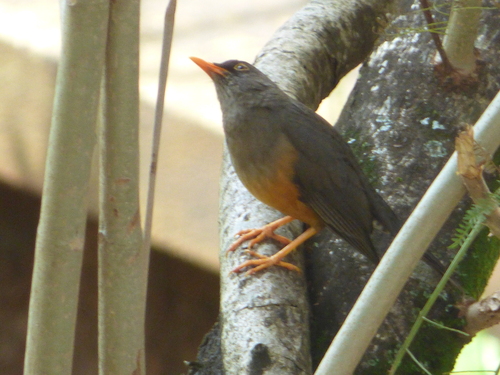
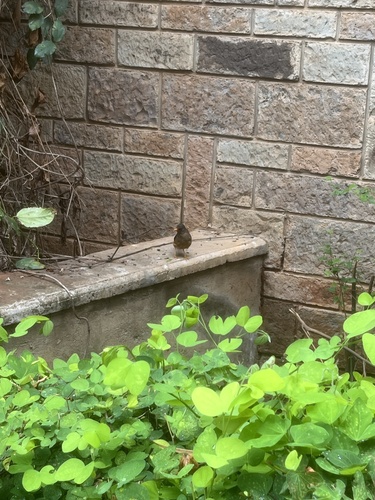
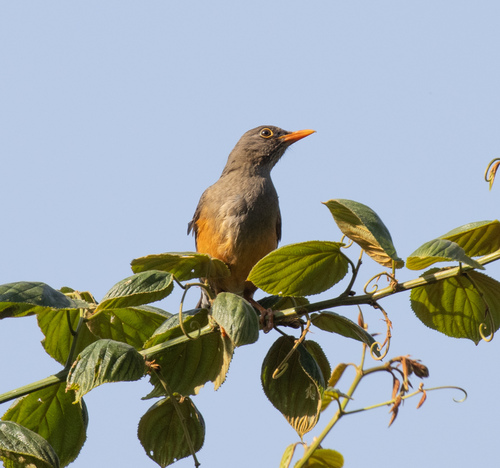
What the Abyssinian Thrush sounds like

ID tip
It is 22 centimetres (8.7 in) long. This variable forest thrush is generally darker than the African thrush and has an orange (not yellow) bill. It is also darker than the Kurrichane thrush and has no malar stripes. Generally the birds get darker at higher altitudes.
Text from Wikipedia, licensed CC BY-SA 4.0.
When to see the Abyssinian Thrush
One bar for each month, and every month is filled: this bird is recorded here in all twelve. The wide bar is November, the month with the most records.
Where to see the Abyssinian Thrush
The map shades 10 countries with regular records, and 2 more in a lighter tone where the bird turns up only as a stray. Everything unshaded has no records. Countries are listed below the map.
Recorded as a rare visitor in Nigeria, South Sudan.
About the Abyssinian Thrush
The Abyssinian thrush is a passerine bird in the family Turdidae. It is also known as the African mountain thrush, or northern olive thrush The species was formerly treated as conspecific with the olive thrush but the species were split based on the genetic differences. The ranges do not overlap. The Abyssinian thrush is native to the eastern Afromontane.
Text adapted from Wikipedia, licensed CC BY-SA 4.0.
Easily confused with
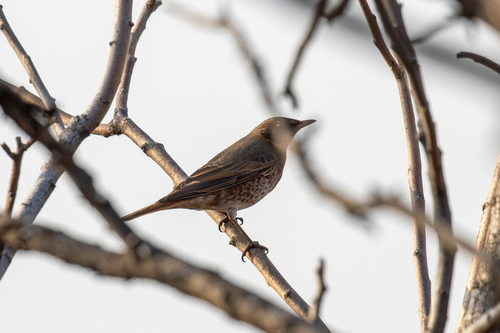 Naumann's ThrushTurdus naumanniNaumann's thrush is a species of the thrush family Turdidae which breeds eastwards from central Siberia to North Manchuria, Amurland and Sakhalin.
 Sooty ThrushTurdus nigrescensThe sooty thrush is 24 to 25.5 cm (9.4 to 10 in) long and weighs about 96 g (3.4 oz).
 Grey-winged BlackbirdTurdus boulboulThe grey-winged blackbird is a species of Turdus in the thrush family, found at in the mountains of southern and eastern Asia from the Himalayas to northern Vietnam.
Side by side: Abyssinian Thrush vs Sooty Thrush
Learn the Abyssinian Thrush in the BeakBrain App
Photo and call practice. Coming soon to iPhone and Android.
Play today's Daily BirdEvery photo and recording on this page is credited to its author under the licence shown. Spotted a problem with this page, or have a better photo? Contribute.