Learn what every symbol on the card means.Full credits and sources at beakbrain.com/symbols
 WoodlandCup nestSmall · 23 g
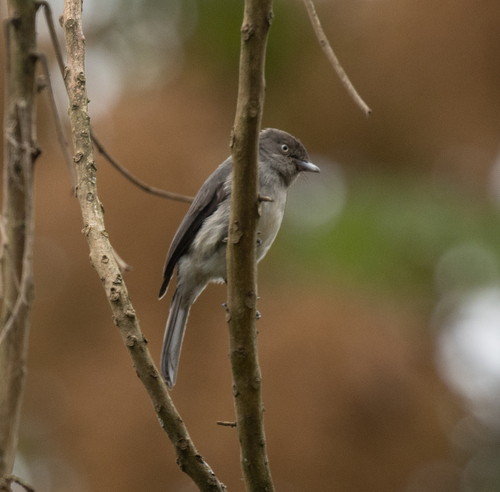
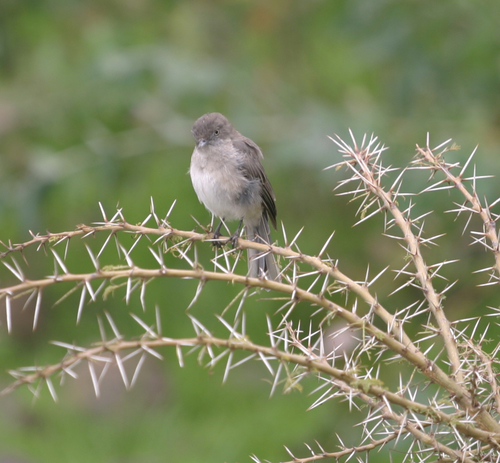
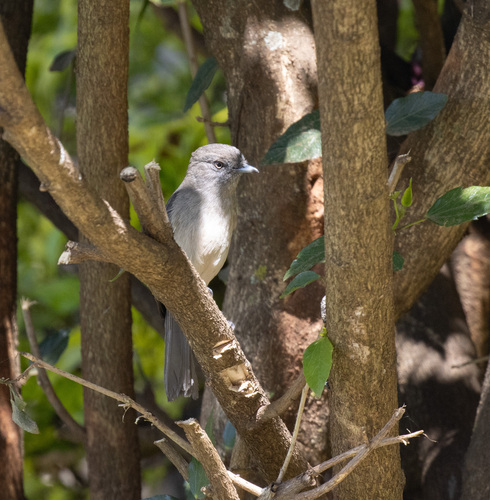
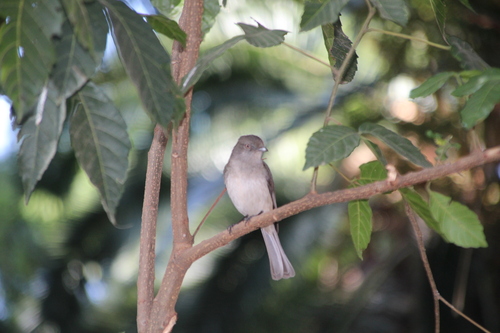
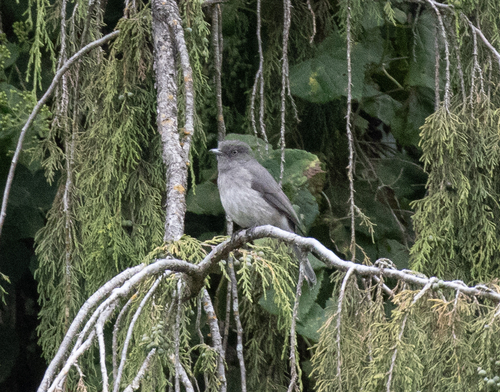
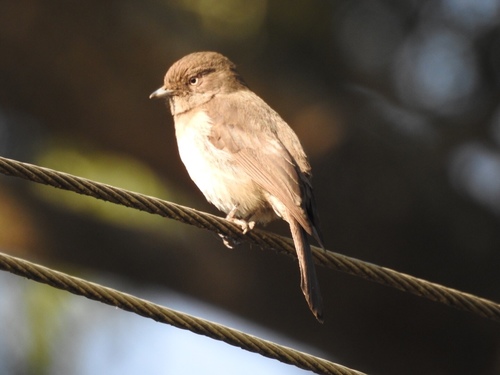
ID tip
The Abyssinian slaty flycatcher is a rather dingy, undistinguished grey brown bird which normally perches with the typical vertical posture of an Old World flycatcher. It has a yellow eye set in a plain brownish face, the upperparts are dark sooty brown and the underparts are buff brown. It measures 15–16 cm (5.9–6.3 in) in length and weights 20–25 g (0.71–0.88 oz). Voice: It makes various "tseep" calls and has a harsh chiiering alarm call.
Text from Wikipedia, licensed CC BY-SA 4.0.
When to see the Abyssinian Slaty Flycatcher
One bar for each month. Filled bars are the 10 months with records; pale bars are months with none. The wide bar is November, the month with the most records.
Where to see the Abyssinian Slaty Flycatcher
The map shades 2 countries with regular records, and 3 more in a lighter tone where the bird turns up only as a stray. Everything unshaded has no records. Countries are listed below the map.
About the Abyssinian Slaty Flycatcher
The Abyssinian slaty flycatcher, also known as Abyssinian flycatcher, Abyssinian black flycatcher or Abyssinian chocolate flycatcher, is a species of bird in the family Muscicapidae, the Old World flycatchers. It is often placed in the genus Dioptrornis. It is native to Africa, where it occurs in Eritrea and Ethiopia.
Text adapted from Wikipedia, licensed CC BY-SA 4.0.
Easily confused with
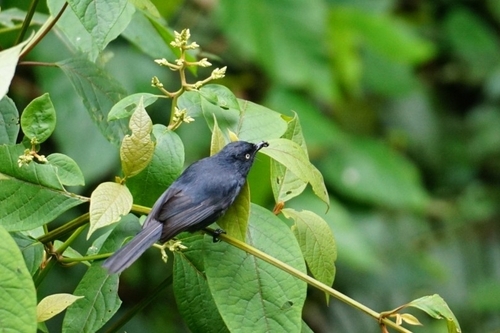 Yellow-eyed Black FlycatcherMelaenornis ardesiacusThe chin, lores and forehead are blackish, the rest of the plumage is a deep blue-grey.
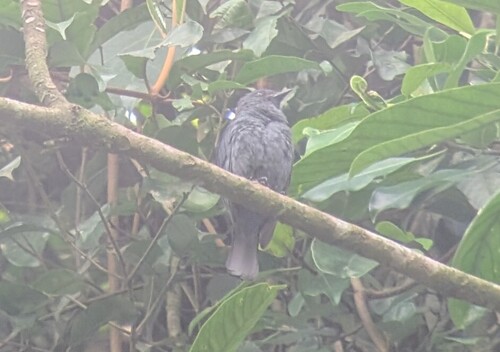 Nimba FlycatcherMelaenornis annamarulaeThe Nimba flycatcher is a small passerine bird of the genus Melaenornis in the flycatcher family Muscicapidae.
Angola Slaty FlycatcherMelaenornis brunneusThe Angola slaty flycatcher is a small passerine bird in the flycatcher family Muscicapidae.
Nimba FlycatcherMelaenornis annamarulaeThe Nimba flycatcher is a small passerine bird of the genus Melaenornis in the flycatcher family Muscicapidae.
Angola Slaty FlycatcherMelaenornis brunneusThe Angola slaty flycatcher is a small passerine bird in the flycatcher family Muscicapidae.
Learn the Abyssinian Slaty Flycatcher in the BeakBrain App
Photo and call practice. Coming soon to iPhone and Android.
Play today's Daily BirdEvery photo and recording on this page is credited to its author under the licence shown. Spotted a problem with this page, or have a better photo? Contribute.