
Wood Warbler
Phylloscopus sibilatrix
The wood warbler is 11–12.5 cm long, and a typical leaf warbler in appearance, green above and white below with a lemon-yellow breast. It can be distinguished from similar species, like the chiffchaff P. collybita and the willow warbler, P. trochilus by its yellow supercilium, throat and upper breast, pale tertial edges, longer primary projection, and by its shorter but broader tail. It is a summer visitor to the United Kingdom, seen from April until August. It has declined there in recent years. Voice: It has two song types, often (but not always) given alternately; a high-pitched fluid metallic trill of increasing tempo lasting 2–3 seconds, and a series of 3 to 5 descending piping notes of lower pitch piüü-piüü-piüü. The contact call is a soft piping note, similar to the second song type, but shorter and given singly, piü.
ID text from Wikipedia, CC BY-SA 4.0

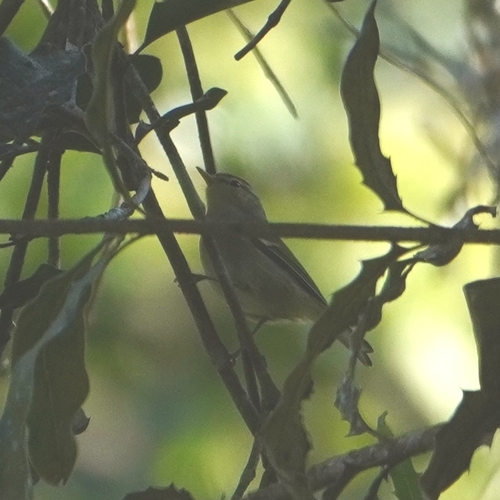
Yellow-browed Warbler
Phylloscopus inornatus
This is one of the smaller Old World warblers, at 9.5–11 cm long and weighing 4–9 g distinctly smaller than a chiffchaff but slightly larger than Pallas's leaf warbler. Like many other leaf warblers, it has overall greenish upperparts and white underparts. It also has prominent double wing bars formed by yellowish-white tips to the wing covert feathers (a long bar on the greater coverts and a short bar on the median coverts), yellow-margined tertial feathers, and long yellow supercilium. Some individuals also have a faint paler green central crown stripe though many do not show this.
ID text from Wikipedia, CC BY-SA 4.0

Where you might meet both
And 23 more countries.
Learn this pair in the BeakBrain App
Photo and call practice. Coming soon to iPhone and Android.
Play today's Daily BirdPhotos and recordings are credited to their authors under the licence shown. Full profiles: Wood Warbler and Yellow-browed Warbler.