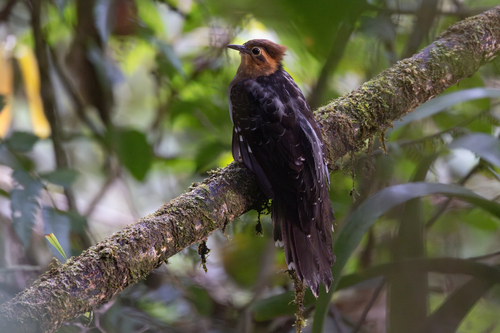
Pavonine Cuckoo
Dromococcyx pavoninus
The head and crest of this bird is rusty brown and the remaining plumage is mainly dark brown above and paler below, with a rich buff coloured supercilium, throat and breast. It is similar in appearance to the pheasant cuckoo but has a slightly different call and is larger overall. Additionally, the buff supercilium, throat and breast of the pheasant cuckoo is paler than in the pavonine cuckoo and the throat and breast of the pheasant cuckoo are heavily marked while those areas of the pavonine cuckoo have no dark spots or streaks.
ID text from Wikipedia, CC BY-SA 4.0
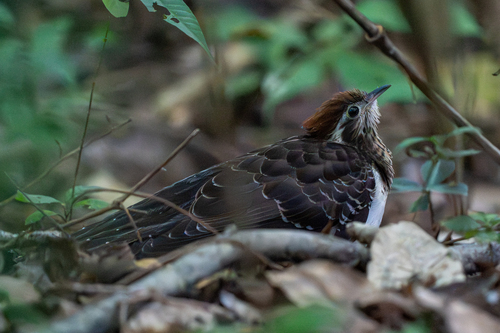
Pheasant Cuckoo
Dromococcyx phasianellus
The pheasant cuckoo is a large cuckoo with a short crest tipped with rusty brown. The bird's upper parts are dark sooty-brown and the underparts are pale buff with small black streaks on the breast. The feathers of the large tail are of varying lengths, with the central ones being the longest. The call consists of two short whistles, the second being of higher pitch, followed by a trill "whee! whee! wheerr-rr". It can be sung from low, medium, or high perches or from the ground.
ID text from Wikipedia, CC BY-SA 4.0
Where you might meet both
Learn this pair in the BeakBrain App
Photo and call practice. Coming soon to iPhone and Android.
Play today's Daily BirdPhotos and recordings are credited to their authors under the licence shown. Full profiles: Pavonine Cuckoo and Pheasant Cuckoo.