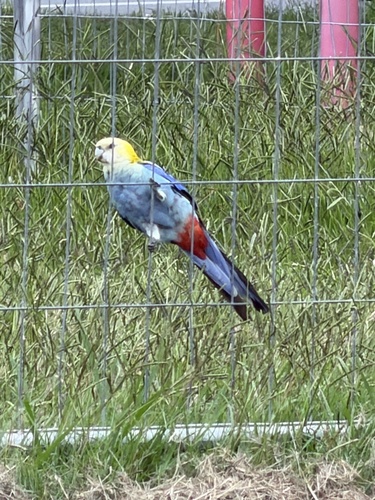
Pale-headed Rosella
Platycercus adscitus
The pale-headed rosella is 33 cm (13 in) long, which includes the 15 cm length of its tail. Its underparts are pale blue, and upper breast and head are pale cream-yellow, the tail which is blue-black and green and the vent which is blood red. The feathers of the nape, scapulars and back are black edged with bright yellow, giving rise to a scalloped appearance. In these margins of the northern race, the yellow is paler with a pale blue tinge. The cheeks are wholly white in the southern subspecies, and partly flushed with blue in the lowerparts in the northern subspecies.
ID text from Wikipedia, CC BY-SA 4.0

Western Rosella
Platycercus icterotis
The smallest species of its genus, the adult western rosella weighs 60 to 70 g (2.1 to 2.5 oz) and is 25 to 30 cm (9.8 to 11.8 in) long. It has broad wings with a 35 to 41 cm (14 to 16 in) wingspan and a long tail that is on average 13 cm (5.1 in), equally half the measurement of its total length. It is the only species of the genus that exhibits marked differences in the coloration of the sexes —the red of the plumage is more scarlet in male P. icterotis. Voice: The regular vocalisation is a rapid series of melodious notes delivered at a low volume. The vocalisation of sister species of other regions is notably louder and more frequently heard in raucous exchanges with other individuals or species.
ID text from Wikipedia, CC BY-SA 4.0
Where you might meet both
Learn this pair in the BeakBrain App
Photo and call practice. Coming soon to iPhone and Android.
Play today's Daily BirdPhotos and recordings are credited to their authors under the licence shown. Full profiles: Pale-headed Rosella and Western Rosella.