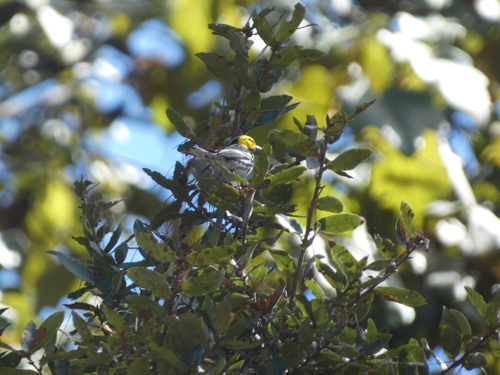
Golden-cheeked Warbler
Setophaga chrysoparia
The golden-cheeked warbler is very striking due to its bright yellow cheeks that are contrasted by its black throat and back. It is also identified by its unique buzzing song emerging from the wooded canyons where it breeds. Golden-cheeked warblers breed in 33 counties in central Texas and are dependent on ashe juniper (blueberry juniper or cedar) for their fine bark strips used as nesting material.
ID text from Wikipedia, CC BY-SA 4.0

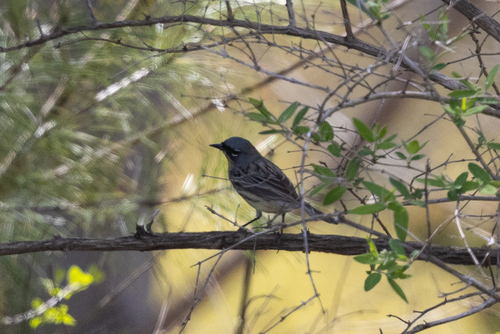
Kirtland's Warbler
Setophaga kirtlandii
Male Kirtland's warblers have bluish-grey upper body parts, with dark streaks on the back, yellow bellies, and dark streaks on the flanks and sides. It has black lores (cheeks) and a distinctive, large and conspicuous broken white eye ring, which it only shares with Setophaga coronata. Females and juveniles are similar, but are browner on the wings and back and are not as boldly or brightly marked. It frequently bobs its tail up and down, which is uncommon in northern warblers. At 14–15 cm (5.5–5.9 in) and 12.3–16 g (0.43–0.
ID text from Wikipedia, CC BY-SA 4.0

Where you might meet both
Learn this pair in the BeakBrain App
Photo and call practice. Coming soon to iPhone and Android.
Play today's Daily BirdPhotos and recordings are credited to their authors under the licence shown. Full profiles: Golden-cheeked Warbler and Kirtland's Warbler.