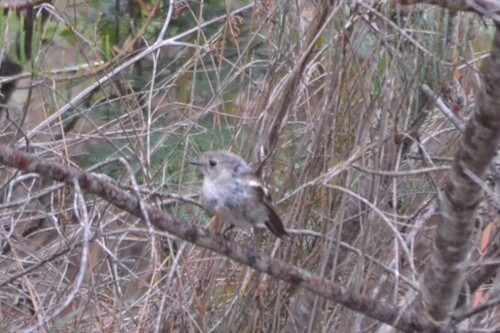
Flame Robin
Petroica phoenicea
The largest of the red robins, the flame robin is 12–14 cm (4.7–5.5 in) long. It has a more slender build than other members of the genus Petroica, with relatively long wings and neck and small head. The male is easily distinguished by the bright orange-red plumage of the throat, breast, and abdomen. The crown, nape, ear coverts, hindneck, and sides of neck are dark grey, and lores and chin are a grey-black. The grey feathers of the sides of the crown may be suffused with dull orange. The rest of the upperparts, comprising the wings, back and tail, are dark grey.
ID text from Wikipedia, CC BY-SA 4.0
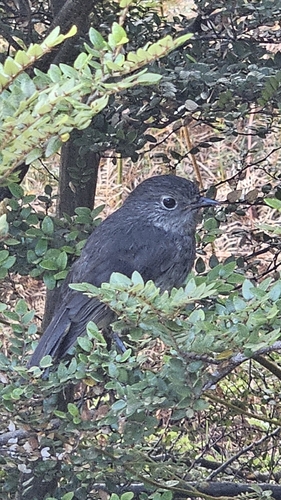
South Island Robin
Petroica australis
The South Island robin is a small passerine, 10–18 cm in length and weighing around 35 g. North Island robins do resemble both females and juveniles of the South Island robins, as well as all the Stewart Island robins, which can sometimes make it difficult to distinguish between the three. The females and juveniles within a particular group of robins look similar to each other, although newly independent juveniles may not yet have the more lightly coloured breast patch. Voice: A male's call during non-breeding season is a series of loud notes with descending frequency, which start in rapid succession and finish slowly. During breeding season, the males resort to full song to court the females. Full song is a loud, clear, and continuous song, which can last for more than 30 minutes with very brief pauses, and is typically sung from the canopy or an emergent tree.
ID text from Wikipedia, CC BY-SA 4.0
Learn this pair in the BeakBrain App
Photo and call practice. Coming soon to iPhone and Android.
Play today's Daily BirdPhotos and recordings are credited to their authors under the licence shown. Full profiles: Flame Robin and South Island Robin.