
European Pied Flycatcher
Ficedula hypoleuca
This is a 12–13.5 centimetres (4.7–5.3 in) long bird. The breeding male is mainly black above and white below, with a large white wing patch, white tail sides and a small forehead patch. The Iberian subspecies F. h. iberiae (known as Iberian pied flycatcher) has a larger forehead patch and a pale rump. Non-breeding males, females and juveniles have the black replaced by a pale brown, and may be very difficult to distinguish from other Ficedula flycatchers, particularly the collared flycatcher, with which this species hybridises to a limited extent.
ID text from Wikipedia, CC BY-SA 4.0

Red-breasted Flycatcher
Ficedula parva
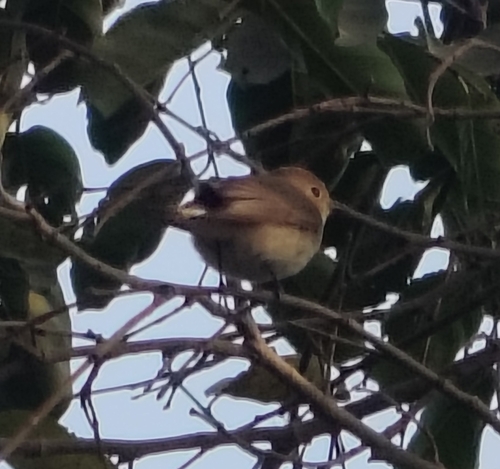
At 11–12 cm long, this is a relatively small flycatcher, only slightly larger than the Eurasian wren. Adult breeding males are mainly muted brown above and white below, with a grey head and orange throat. The bill is black and has a pale pinkish base along with the broad but pointed shape typical of aerial insectivores. The wheatear-like tail is distinctive in all plumages; the tail is entirely black except for the white base on the outer tail feathers. Voice: The song is usually three to four seconds long and consists of far-carrying and repetitive yet sweet-sounding whistles, like that of the European pied flycatcher, but less melodious. Each song phrase is usually preceded by quiet zit or tsi-it notes, followed by a descending multipart sequence that may recall the song of the willow warbler.
ID text from Wikipedia, CC BY-SA 4.0

Where you might meet both
And 24 more countries.
Learn this pair in the BeakBrain App
Photo and call practice. Coming soon to iPhone and Android.
Play today's Daily BirdPhotos and recordings are credited to their authors under the licence shown. Full profiles: European Pied Flycatcher and Red-breasted Flycatcher.