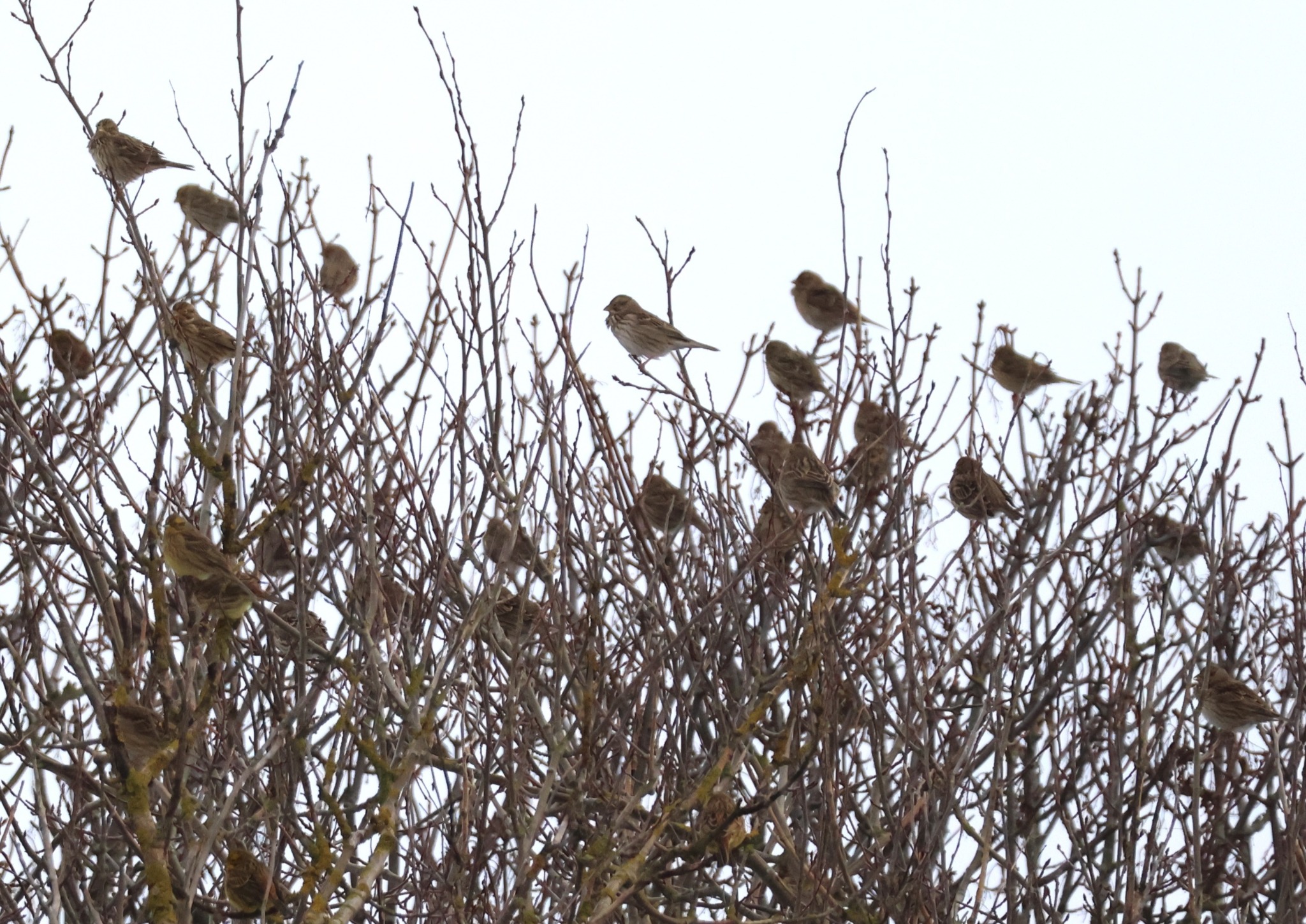
Corn Bunting
Emberiza calandra
This is an unusual bunting because the plumages of the sexes are similar in appearance, though the male is approximately 20% larger than the female. This large bulky bunting is 16–19 cm long, with a conspicuously dark eye and yellowish mandibles. Males lack any showy colours, especially on the head, which is otherwise typical of genus Emberiza. Both sexes look something like larks, being streaked grey-brown above with whitish underparts. The underparts are streaked over the flanks and breast, and the streaking forms gorget around the throat.
ID text from Wikipedia, CC BY-SA 4.0

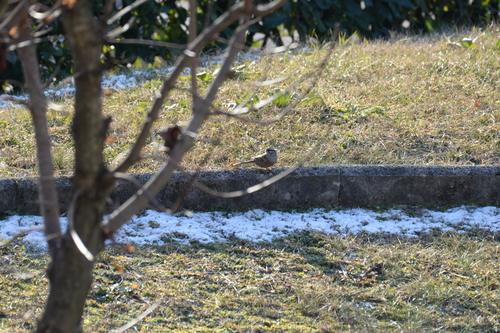
Rock Bunting
Emberiza cia
This bird is 16 cm in length. The breeding male has chestnut upperparts, unmarked deep buff underparts, and a pale grey head marked with black striping. The female rock bunting is a washed-out version of the male, with paler underparts, a grey-brown back and a less contrasted head. The juvenile is similar to the female, but with a streaked head. There are four races differing mainly in the plumage shades, although the subspecies which breeds in Europe, Africa and western Turkey is the only one to show white wing bars. Voice: The call is a sharp tseee, and the song is a twittering churrrr-chirrriiii-itt.
ID text from Wikipedia, CC BY-SA 4.0

Where you might meet both
And 22 more countries.
Learn this pair in the BeakBrain App
Photo and call practice. Coming soon to iPhone and Android.
Play today's Daily BirdPhotos and recordings are credited to their authors under the licence shown. Full profiles: Corn Bunting and Rock Bunting.