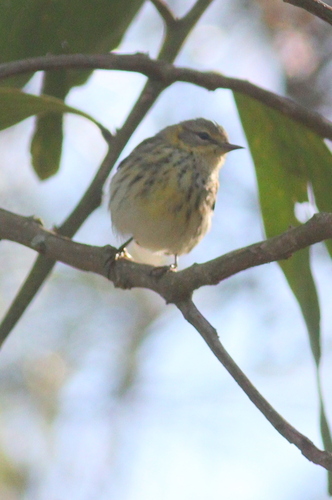
Cape May Warbler
Setophaga tigrina
This bird is a small passerine and is a mid-sized New World warbler. Length can vary from 12–14 cm (4.7–5.5 in), wingspan is 19–22 cm (7.5–8.7 in), and body mass can range from 9–17.3 g (0.32–0.61 oz). Among standard measurements, the wing chord is 6.1–7.3 cm (2.4–2.9 in), the tail is 4.3–5 cm (1.7–2.0 in), the bill is 0.9–1.2 cm (0.35–0.47 in) and the tarsus is 1.7–1.9 cm (0.67–0.75 in). The adult male Cape May warbler has a brown back, yellowish rump and dark brown crown. The underparts are yellow streaked with black, giving rise to the bird's scientific name.
ID text from Wikipedia, CC BY-SA 4.0

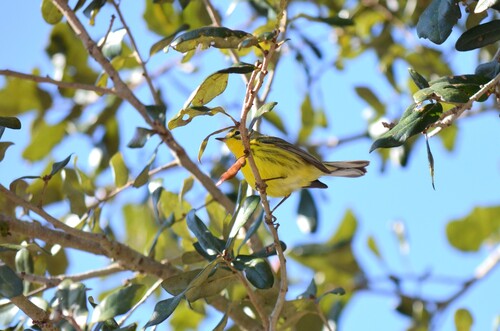
Prairie Warbler
Setophaga discolor
These birds have yellow underparts with dark streaks on the flanks. In males, the back is olive green with chestnut or rufuos streaks. A black stripe runs through the eye, and another black stripe runs from the beak down the throat. This semicircular stripe gives them a distinctive "tired" look. They have two faint wing bars. Their tails have large white areas, and they have dark legs. Coloring is duller in females and immature birds, and streaks are fainter or absent. The subspecies S. d. paludicola is also duller overall. Voice: Prairie warblers have two categories of songs, referred to as Type A and Type B. Type A songs are typically a series of ascending buzzy notes. The B songs are an ascending series of whistled notes that often contain some buzzy notes. Compared to A songs, the B songs are lower in pitch and have fewer, longer notes. The total song length is longer as well in Type B songs.
ID text from Wikipedia, CC BY-SA 4.0

Where you might meet both
And 2 more countries.
Learn this pair in the BeakBrain App
Photo and call practice. Coming soon to iPhone and Android.
Play today's Daily BirdPhotos and recordings are credited to their authors under the licence shown. Full profiles: Cape May Warbler and Prairie Warbler.