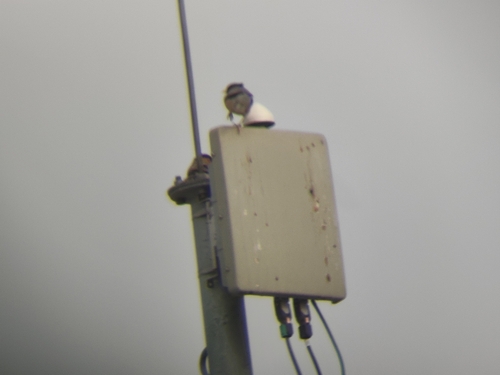
Brahminy Starling
Sturnia pagodarum
This myna is pale buff creamy with a black cap and a loose crest. The bill is yellow with a bluish base. The iris is pale and there is a bluish patch of skin around the eye. The outer tail feathers have white and the black primaries of the wings do not have any white patches. The adult male has a more prominent crest than the female and also has longer neck hackles. Juveniles are duller and the cap is browner. The species name pagodarum is thought to be based on occurrence of the species on buildings and temple pagodas in southern India.
ID text from Wikipedia, CC BY-SA 4.0
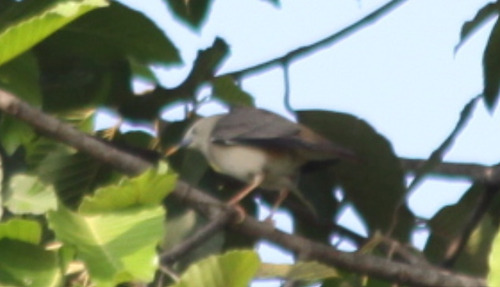
Chestnut-tailed Starling
Sturnia malabarica
The adults have a total length of approximately 20 cm (7.9 in). They have grey upperparts and blackish remiges, but the colour of the remaining plumage depends on the subspecies. In the nominate subspecies and blythii, the underparts (incl. undertail) are rufous, but in nemoricola the underparts are whitish tinged rufous, especially on the flanks and crissum (the undertail coverts surrounding the cloaca). The nominate and nemoricola have a light grey head with whitish streaking (especially on crown and collar region). Both subspecies have white irises and a yellow bill with a pale blue base.
ID text from Wikipedia, CC BY-SA 4.0
Where you might meet both
Learn this pair in the BeakBrain App
Photo and call practice. Coming soon to iPhone and Android.
Play today's Daily BirdPhotos and recordings are credited to their authors under the licence shown. Full profiles: Brahminy Starling and Chestnut-tailed Starling.